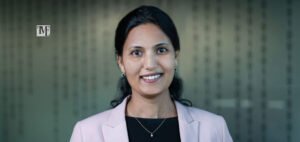

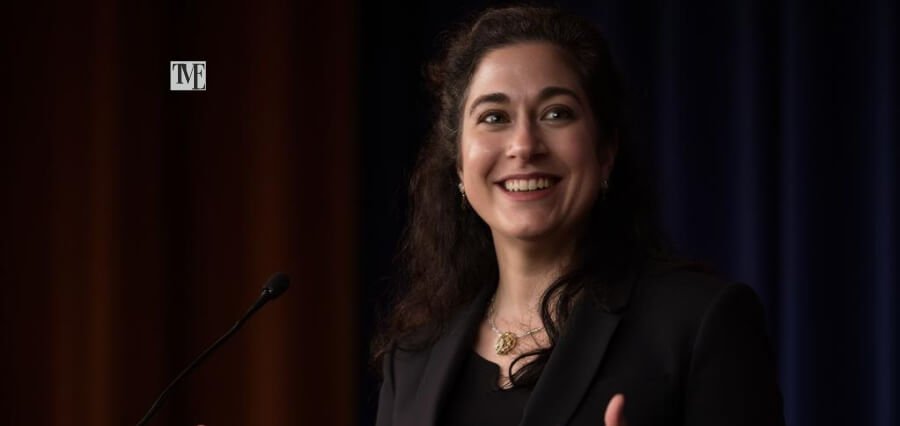
Leadership has the potential to change systems, influence decisions, and enrich people’s lives. When it comes to the field of healthcare, the actual value of leadership goes beyond innovation and depends largely on the quality of frameworks under which the process occurs. Each year, there emerges a new generation of leaders who change the perception and practice of leadership in healthcare. Dr. Julia Rehman, Founder and Chief Operating Officer of Kota Kompany LLC, is one of those leaders.
Within the past two years, she has created an independent advisory practice in the Gulf region driven by her vision of how to improve healthcare systems. Her entire philosophy revolves around a strong belief that the problem of health care is not in the lack of information; the problem is in the lack of governance, which would transform this information into action. Through her work, she helps institutions to bridge the gap between information, accountability, ethics and outcome.
Building Kota Kompany
Dr. Julia’s journey into entrepreneurship was shaped by seventeen years of healthcare leadership across four countries. During this time, she observed a common challenge across healthcare systems. Many organizations had highly skilled clinical professionals and access to large amounts of data. However, they often struggled to turn this information into clear and effective enterprise strategies.
Her experience in the United States, the United Arab Emirates, Saudi Arabia, and India showed her that the challenge was widespread. She realized that working within a single institution would not provide the scale needed to address it.
In March 2024, Dr. Julia Rehman established her company in Sharjah Media City and took on the role of Founder and Chief Operating Officer. This step allowed her to work with governments, healthcare systems, and emerging technology partners. She helps organizations use data and digital transformation to strengthen governance and improve decision-making.
Her work is based on a clear principle: healthcare organizations do not lack information. They need effective systems that can turn information into meaningful action. Choosing Sharjah Media City as the company’s base was a strategic decision. It positioned the organization within the UAE’s growing digital healthcare sector and connected it with the wider network of Gulf institutions she had supported throughout her career.
The Foundation of Trust
The early stages of entrepreneurship required a different kind of determination. In an established healthcare organization, a leadership title often provides immediate credibility. As an independent founder, Dr. Julia Rehman had to build trust through every relationship and professional interaction. She often led discussions in environments where women leaders were still less common.
Before securing revenue from her first engagement, Dr. Julia Rehman spent several months developing legal frameworks, memoranda of understanding, and advisory agreements. This experience strengthened her understanding of leadership during uncertain times. She learned that effective leadership does not depend only on showing confidence. It also requires strong documentation, clear governance, and consistent actions. These practices help leaders build trust and earn credibility over time.
Accountability in Action
Dr. Julia Rehman views governance as a form of care rather than control. She encourages every team to treat data quality, ethical artificial intelligence use, and interoperability as responsibilities to the patients and communities represented in every dataset. She does not view them as simple compliance requirements.
She leads with honesty and accountability. She communicates openly about challenges and limitations, including her own. She also ensures that clear actions and measurable results support every strategy. Through her work with international fellow networks, she encourages people to take ownership instead of waiting for instructions. She believes that an organization that depends on one strong leader cannot remain resilient over time.
Her approach differs from the founder-focused model often associated with consulting organizations. She views leadership visibility as a tool that supports the organization’s purpose rather than as the main goal. Her focus remains on building strong systems, developing capable people, and creating lasting impact.
Driving Purposeful Growth
Dr. Julia Rehman does not pursue innovation simply because it is new. Instead, she evaluates every initiative by asking a clear question: Does it improve a meaningful decision for a patient, clinician, or policymaker?
Whether an initiative involves artificial intelligence, predictive analytics, or a new advisory partnership, she focuses on practical value and measurable impact. This approach supports thoughtful and purposeful growth. It also helps ensure that innovation addresses real needs rather than short-term trends.
She continues to invest in her education and professional development. She is pursuing doctoral studies, public health education, and a master’s degree in artificial intelligence. She believes that continuous learning helps leaders challenge existing assumptions and remain focused on their organization’s mission. Her commitment to learning strengthens her ability to lead with knowledge, adaptability, and a long-term vision.
Governance-Driven Growth
Dr. Julia Rehman chose to slow the growth of her advisory relationships until strong legal and governance systems were in place. Although new opportunities were available, she prioritized building the right foundation before expanding further.
She established formal agreements, including mutual non-disclosure arrangements and structured consulting contracts, before pursuing growth. This approach sometimes required her to delay opportunities and accept short-term limitations. However, the decision helped protect the relationships that followed and supported long-term success.
This experience strengthened her understanding of responsible leadership. She learned that effective leadership is not always defined by bold or highly visible decisions. Often, lasting success comes from the discipline to build strong systems correctly before expanding quickly.
Empowering Through Ownership
Through her work with fellows and communities of practice across an international healthcare association, Dr. Julia Rehman has learned that trust grows when people see that their contributions create meaningful value. She believes that genuine responsibility is more effective than symbolic recognition.
She gives individuals ownership of clearly defined initiatives and supports them by removing barriers rather than giving constant instructions. When fellows and team members understand that a deadline, communication channel, or strategic initiative is truly their responsibility, they develop leadership skills more quickly.
This practical experience can provide valuable growth beyond formal training programs. By building trust, encouraging ownership, and removing obstacles, she helps individuals grow into confident and capable leaders.
Advancing Responsible AI
Dr. Julia Rehman closely follows the evolving healthcare landscape. She identifies a major shift in the role of artificial intelligence. It is moving beyond automation and becoming a decision-support partner that operates within strong governance structures.
Predictive analytics for hospital operations, workforce planning aligned with national healthcare strategies, and interoperability across previously disconnected systems are no longer future concepts. They are becoming essential priorities for healthcare organizations focused on improving outcomes.
She believes that every technology initiative should begin with governance and ethics. Responsible artificial intelligence should be integrated into the development process from the start rather than added later. This approach helps organizations reduce risks, protect trust, and support effective implementation.
Leading with Lasting Impact
Dr. Julia Rehman believes that numbers show what has been achieved, while influence reflects the impact that continues over time. She hopes her work creates stronger governance practices, develops confident regional leaders, and helps healthcare organizations trust their data and use it to make informed decisions.
Through her involvement with international healthcare associations, she supports the growth of leaders and strengthens healthcare systems. Her focus is on creating lasting value that continues beyond individual projects and measurable results.
In the Gulf region, national transformation strategies increasingly connect healthcare modernization with broader economic development. Dr. Julia Rehman hopes her contribution will be reflected in leaders who can make sound, data-informed decisions with confidence. She believes that meaningful leadership creates the knowledge, systems, and capabilities that allow others to succeed independently.
Lessons Beyond the Classroom
The most transformative lessons of her career came from working across four countries and gaining experience in both public and private healthcare systems. Each system had different perspectives on leadership, decision-making, patience, and the use of evidence. These lessons could not be learned through academic study alone. They required practical experience and a deep understanding of different environments.
She developed a strong respect for context and recognizes that one governance model may not work effectively in every healthcare system. A model designed for an integrated healthcare system in the United States may not be suitable for a government health authority in Riyadh or Abu Dhabi.
This awareness has shaped her leadership approach. She believes that humility, adaptability, and respect for different perspectives are essential for creating meaningful and sustainable change. More than any professional credential, these qualities have influenced the leader she has become.
A Legacy of Impact
Looking ahead, Dr. Julia Rehman hopes to build a legacy that extends beyond a company name or professional title. She aims to show that a woman-led advisory practice based in the MENA region can operate at the same strategic level as leading global consulting organizations. Her message to aspiring entrepreneurs and future healthcare leaders is clear. Build strong systems and foundations before pursuing rapid growth. Earn trust in environments where your leadership may not be expected. Allow the quality of your work and the results you achieve to demonstrate your value.
This perspective is shaped by both the challenges she has observed and the lessons she has gained through her own professional experience. She applies these principles to her decisions and encourages others to do the same.
She believes that healthcare systems across the region and beyond need leaders who are willing to invest time and effort in meaningful, long-term progress. In the years ahead, she plans to support and develop more leaders who are prepared to take on this responsibility.