

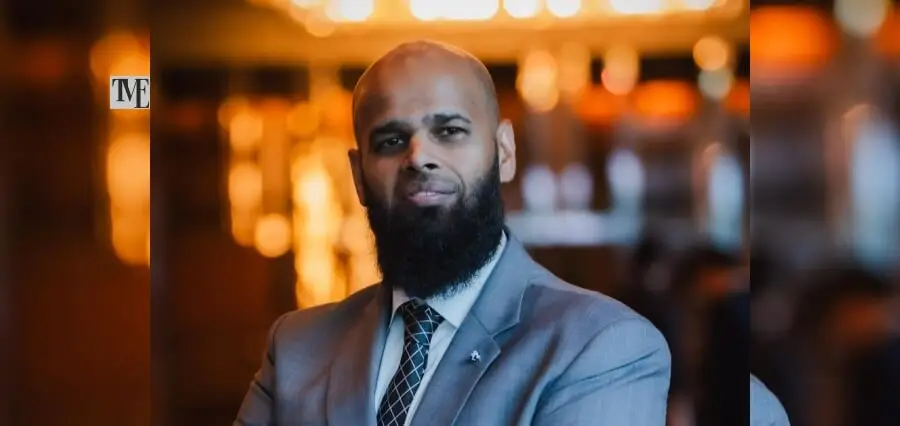
Artificial intelligence is transforming healthcare at a rate never seen before. By enabling predictive care, accelerating digital transformation, and improving clinical judgment, AI is revolutionizing the way healthcare organizations deliver better outcomes. But every great idea has a leader behind it who understands that technology only adds value when it improves people’s lives.
Umar Ansari, the Global Head of AI Solutions, has built his career on transforming technical advancements into useful healthcare solutions. His leadership has always been driven by the straightforward conviction that significant innovation starts with people, even though his work has been at the vanguard of AI-driven transformation. He continues to assist healthcare businesses in embracing change while putting patients and clinicians at the heart of every decision by fusing strategic vision with empathy and teamwork.
Experience-Driven Leadership
Umar’s leadership philosophy was not shaped by a single defining moment. Instead, it evolved through years of learning from different experiences and leaders. Throughout his career, he worked alongside leaders in technology, consulting, and healthcare. Each of them uniquely influenced his thinking. Some taught him how to inspire teams during uncertain times. Others showed him how to make difficult decisions while maintaining the trust of those around them.
“I was building an informal playbook of leadership,” he says, describing how he consciously collected the strongest habits he saw and just as consciously noted the behaviors he never wanted to repeat. This habit of careful observation helped him build a leadership style based on his own values rather than following someone else’s approach.
As Umar worked with organizations at different stages of digital maturity, his understanding of leadership continued to grow. Enterprise rollouts, global AI initiatives, and healthcare modernization projects reinforced the same lesson from different perspectives. He realized that technology alone does not create success. Even the most advanced solutions fail when they do not fit the way people work. Lasting transformation begins with understanding decision-makers and defining success from their perspective instead of relying only on presentations or strategy documents.
This belief shapes Umar’s approach to leadership. In an industry where every decision affects patients, clinicians, and healthcare organizations, he sees leadership as bringing clarity to complex situations, aligning diverse perspectives, and ensuring that innovation delivers measurable value instead of existing simply because it can.
AI Innovation with Purpose
Artificial intelligence is one of the fastest-evolving industries, with breakthroughs emerging almost every week. In his view, no leader can have every answer in such a rapidly changing environment. Technology that once evolved over several years now changes within months or even weeks. Instead of trying to keep up with every new development, he focuses on a more important question: which innovations solve real and meaningful problems?
Not every advanced AI model, he argues, deserves a place in a healthcare strategy. For him, the ability to separate technical innovation from practical business value has become an essential leadership skill. This approach has also strengthened his ability to lead through collaboration. AI initiatives bring together clinicians, data scientists, engineers, product teams, regulators, and operations leaders. Each group brings a different perspective.
He also draws a clear distinction between organizations that adopt AI early and those that adopt it effectively. “Organizations succeed because they adopt it thoughtfully,” he says. For him, curiosity, humility, sound judgment, and a strong commitment to patient care are the qualities that help organizations embrace change while remaining focused on the people they serve.
Lessons Beyond the Classroom
When asked what no classroom ever taught him,Umar Ansari answers without hesitation. To him, expertise and leadership are not the same. Expertise builds credibility, while leadership creates an environment where people can contribute their best ideas. According to him, these are two very different skills that require different kinds of growth.
Over the years, Umar Ansari has become more comfortable admitting what he does not know. As his experience has grown, he has found himself asking more questions instead of fewer. He focuses on building teams that solve problems together. Strong teams, he maintains, are built on trust, where people feel confident enough to challenge ideas, share different perspectives, and take ownership of the outcome.
Umar has found that when this level of trust exists, the quality of decisions improves significantly. These lessons, in his view, cannot be learned in a classroom. They come from working closely with people, learning from mistakes, and earning trust through consistent actions over many years.
Balancing Innovation
Leading innovation in a large healthcare organization requires balancing urgency with readiness. This, he notes, is one of the most challenging aspects of leadership. Artificial intelligence is evolving rapidly, and waiting too long can mean missing valuable opportunities. At the same time, healthcare demands careful decision-making because every choice can have an impact on patient care.
Umar accepts that not every initiative will succeed. In his experience, even unsuccessful projects can provide valuable lessons if they are executed quickly and thoughtfully. A well-managed pilot that proves an idea will not work still gives an organization meaningful insights. In contrast, spending months waiting for complete certainty often delays progress without adding value.
One of his key leadership responsibilities is deciding how strongly to support a new idea. Some initiatives require consistent advocacy because of their long-term potential. Others need time, allowing stakeholders to ask questions, test the concept, and build confidence through experience. Meaningful progress, he is convinced, comes from taking action, learning from results, and making improvements along the way rather than waiting for uncertainty to disappear.
Empathy as a Practical Tool
In a field driven by data, technology, and precision, empathy, he believes, is one of the most valuable leadership skills. Throughout his career, he has worked with clinicians, engineers, data scientists, product managers, and executives. He has seen that each group approaches the same challenge from a different perspective. Engineers focus on technical excellence. Clinicians prioritize patient safety. Operations leaders concentrate on workflows. Executives think about long-term sustainability. According to Umar, none of these perspectives are wrong. They are shaped by different roles and responsibilities.
Many disagreements, he believes, arise not because people lack expertise, but because they are trying to solve different problems at the same time. In his experience, empathy allows leaders to understand another person’s perspective before trying to influence their thinking. Once people feel heard and understood, collaboration becomes stronger and more effective.
He applies the same approach to mentoring. Rather than using a single leadership style for everyone, he takes time to understand what motivates each individual and how they want to grow.
Leading with Trust
Leading through change often brings uncertainty, but in his experience, teams do not expect their leaders to have every answer. Instead, they value honesty, consistency, and a clear sense of direction. He is a strong advocate of communicating early, even when every detail has not yet been finalized. In his experience, uncertainty is easier to manage than silence. People become anxious when they feel excluded from the process and are left to make assumptions on their own.
For Umar, consistency is the foundation of credibility. Frequent changes in priorities or actions that do not match stated values can quickly weaken trust. For this reason, he makes sure his teams understand his principles and know what he stands for, regardless of the situation.
He also encourages open and respectful disagreement. Trust, he maintains, is not built by everyone thinking the same way. It is built when people feel confident enough to challenge ideas while continuing to work toward a shared goal. He has found that some of his strongest decisions have come from these honest and constructive discussions.
Developing Future Leaders
In Umar’s view, leadership potential is not defined by job titles or years of experience. Instead, he looks for qualities such as curiosity, ownership, resilience, and a willingness to learn. In his view, these qualities are much more valuable and far more difficult to teach than technical skills.
His mentoring approach focuses on developing independent thinking. Rather than providing immediate answers, Umar Ansari asks questions that encourage people to analyze problems and reach their own conclusions. At the same time, he ensures they know support is always available whenever they need guidance.
People, he also believes, perform at their best when their roles match their strengths. Throughout his career, he has seen talented individuals struggle in one position and excel in another that better suited their abilities. This experience has reinforced the importance of helping people find the right opportunities to grow.
He believes that feedback should be continuous rather than limited to annual performance reviews. He makes it a priority to recognize good work as it happens and to address challenges early.
Foundations of Lasting Leadership
For Umar, long-term success is built through consistent habits rather than major milestones. Curiosity is one of the qualities he values the most. He makes it a habit to ask questions that others may hesitate to ask. Early in his career, this made him feel uncertain. Over time, it has become one of his greatest strengths.
Reflection is another important part of his leadership approach. After important meetings or key decisions, Umar Ansari takes time to think about what he learned and how those lessons can improve future conversations. This habit, he says, has contributed more to his personal and professional growth than any formal leadership program.
Staying connected to the people and environments his work serves matters just as much to him. He regularly visits hospitals and speaks directly with healthcare leaders to ensure his decisions remain practical and relevant. Above all, credibility, he holds, is built through consistent follow through. Keeping promises, delivering on commitments, and responding when expected are the small actions that build lasting trust and strengthen leadership over time.
Advice for AI Leaders
Umar’s advice to professionals who aspire to lead in artificial intelligence is clear. Stay curious and never allow experience to replace continuous learning. As he puts it, the field is evolving too quickly for anyone to claim complete mastery. The leaders who make the greatest impact are those who continue to question their assumptions and remain open to new ideas.
Umar Ansari encourages emerging leaders to invest as much time in understanding healthcare as they do in understanding technology. In his view, lasting value comes from solving real challenges faced by clinicians and patients rather than focusing only on technical advancement.
Strong professional relationships, he believes, should be built long before they are needed. Conversations with colleagues, mentors, and even critics have played an important role in shaping his own perspective. For Umar, influence is earned through consistency, integrity, and trust rather than through a job title. While technology will continue to evolve, he is confident that curiosity, humility, and the ability to bring people together will always remain essential qualities of effective leadership.