
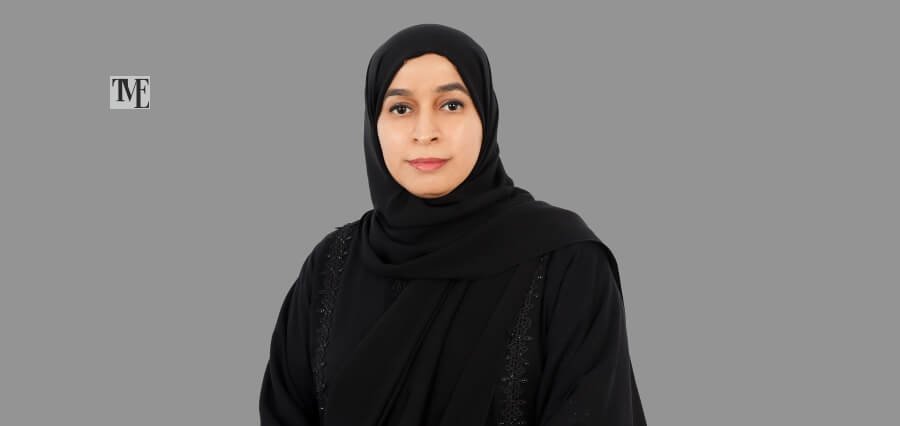
Vision, discipline, and a commitment to meaningful change are essential to creating lasting impact in public service. Great leaders do not merely fulfill their responsibilities. They strengthen institutions, improve systems, and leave a lasting legacy. As Deputy Director of the Finance Department for Government Financial Affairs of the Government of Fujairah, Maryam Abdullah Al Matrooshi has demonstrated purposeful leadership by applying her financial expertise to support institutional progress and create meaningful impact.
Her leadership extends across several important government and national platforms. She serves on the boards of the Federal Tax Authority and Etihad Credit Insurance. She also contributes to the Government Financial Policies Coordination Council. Representing the Government of Fujairah at the National Economic Statistics Retreat, she brings her expertise to discussions that support financial policy, economic development, and public sector performance.
Creating Lasting Systems
Maryam Abdullah Al Matrooshi approaches leadership as the work of building strong and sustainable systems. Her focus has moved beyond completing individual tasks to creating structures that continue to deliver results over time. She sees leadership responsibility as growing with every increase in authority. Making the right decision is important, but it must also create sustainable value and strengthen trust.
“I focus on creating systems that continue to deliver value long after an individual decision has been made,” she says. This approach has shaped her professional journey. Her work includes advancing financial and economic initiatives, improving the quality of government data, and strengthening reports that help Fujairah’s decision-makers understand the emirate’s economic position with greater clarity.
Driving Change Through Trust
Maryam Abdullah Al Matrooshi believes that successful change cannot simply be imposed from the top. It must be built with the people who will deliver it. Her approach begins with listening to stakeholders, understanding their concerns, and addressing the questions they may have. She then explains the reasons for the change, its objectives, and the outcomes it is expected to achieve. When employees understand why change is necessary, they become active partners rather than passive recipients.
“I see change as a shared journey built through listening, trust, and genuine empowerment,” she says. Empowerment is central to her leadership style. However, assigning responsibility alone is not true empowerment. Employees need the authority, information, tools, and training required to succeed. Leaders must also remain available to remove obstacles and provide support throughout implementation.
For Maryam, stability does not mean slowing down reform. It means managing change carefully while protecting daily operations. Her team sets clear priorities, introduces changes in phases, pilots new solutions, and evaluates their impact on employees, operations, and customers. She also sees small early successes as an important way to build confidence. Saving time on a process or simplifying a procedure can demonstrate the value of change. Over time, these results build trust and encourage employees to become advocates for transformation.
Cultivating Sustainable Innovation
For Maryam, innovation is not a temporary initiative or a public relations exercise. She views it as an integrated institutional system that supports financial sustainability, operational efficiency, and better public services. Her approach begins with strong foundations. These include clear policies, effective governance, defined responsibilities, and structured processes for collecting and evaluating ideas. The most promising ideas are then developed into practical projects with measurable outcomes.
“I see innovation as a disciplined process that turns good ideas into measurable and sustainable results,” she says. Her department has also introduced an innovation platform that connects ideas with strategic objectives, performance indicators, and risk management. Innovation incubators and dedicated idea development programs further support this process.
The department’s efforts have received external recognition. It earned Gold Accreditation from ideasUK for its institutional innovation management framework. This achievement reflects the maturity of an innovation system that goes beyond informal brainstorming and turns ideas into measurable results.
Leading with Wisdom and Courage
When discussing effective leadership in a government institution focused on excellence, collaboration, and continuous improvement, Maryam Abdullah Al Matrooshi Abdullah Al Matrooshi highlights the importance of wisdom. She describes wisdom as a combination of patience, active listening, understanding people, and carefully assessing situations before making decisions.
“I approach leadership with patience and courage, listening carefully before making decisions that carry lasting responsibility,” she says. She also emphasizes the importance of giving people a genuine opportunity to share their views. Valuable solutions can often come from employees who work closely with a process or from experiences that have not yet been fully considered. For Maryam, wisdom must be supported by courage. She sees courage as the ability to choose the most appropriate decision rather than the quickest one and to take full responsibility for the outcome.
Excellence also requires a forward-looking mindset. Leaders must anticipate change rather than wait for problems to appear. They must also demonstrate fairness and consistency by ensuring that their actions reflect their words. This leadership philosophy aligns with the Fujairah Government Excellence System. The system connects the emirate’s broader vision with innovation, strong institutional foundations, future readiness, and the creation of lasting value for the community.
Data-Led Decision Making
Financial work often presents complex decisions, and Maryam Abdullah Al Matrooshi approaches them with a clear principle. Difficult decisions should be based on the best available data rather than impressions or reactions. Her process begins by identifying what must be protected. She then compares different options based on their financial, operational, and social impact. She also assesses the risks involved and considers how each option supports the emirate’s broader priorities.
“I rely on data, sound judgment, and stakeholder insight to make decisions that protect resources and create public value,” she says. Maryam Abdullah Al Matrooshi also recognizes that complete information is not always available. Uncertainty should not prevent leaders from making necessary decisions. Instead, leaders should clearly separate known facts from assumptions and identify areas that require further monitoring. Data, technical expertise, stakeholder input, and flexible scenarios can help leaders respond when circumstances change.
When priorities compete for limited resources, public value remains a key consideration. The preferred option should support resource sustainability, maintain service continuity, and create meaningful value for the emirate.
For Maryam, risk management is not about eliminating risk. It is about understanding risks, defining acceptable limits, and establishing appropriate safeguards. A decision also requires continued attention after it is made. Its results should be monitored, assumptions should be reviewed, and lessons should be used to improve future decisions.
Strategic Financial Alignment
Maryam Abdullah Al Matrooshi describes the Finance Department’s strategic plan as the link between daily operations and Fujairah’s wider development priorities. The department’s role goes beyond managing budgets and tracking revenue. It supports government decision-making, directs resources toward strategic priorities, and helps government entities deliver their projects efficiently.
“I connect financial strategy with wider development priorities so that resources are directed where they can create the greatest impact,” she says. The strategy is built around five key pillars. These are financial stability and sustainability, governance and risk management, digital transformation and innovation, human capital development, and effective partnerships. The plan aligns with Fujairah Plan 2028 and supports the national focus on building a more innovative and agile government. It also reflects the emirate’s commitment to digital transformation and reducing administrative procedures.
At the departmental level, Maryam’s team has launched five strategic technology projects. These include budget automation through an Oracle-based system, an institutional performance and innovation platform, an e-invoicing project, a procurement platform, and a new departmental website. Some projects have already been completed, while others are scheduled for delivery by the end of the 2027 strategic cycle.
The department has also made significant progress in reducing bureaucracy. It has reduced internal processes by 57 percent, lowered procedural requirements by 70 percent, and shortened completion times by 35 percent. These improvements have contributed to a customer happiness score of 96.6 percent.
Nurturing Future Leadership
Maryam Abdullah Al Matrooshi sees leadership development as a practical process. It cannot depend on theoretical training alone. Talented employees need real opportunities to participate, take responsibility, and apply their skills. Her department involves promising professionals in programs, initiatives, projects, and committees. They are encouraged to present ideas and lead tasks while receiving regular mentoring and feedback.
“I empower future leaders by giving them responsibility, trust, guidance, and the opportunity to learn through experience,” she says. Empowerment remains an important part of her approach. It means giving employees authority, information, and trust. It also means providing support throughout the process rather than simply assigning a task and stepping away.
For Maryam, future government leaders must first demonstrate integrity and a strong sense of responsibility toward public resources. They also need strategic thinking, analytical skills, data literacy, and the ability to build partnerships across different areas of expertise.
She also values intellectual humility, adaptability, and a commitment to continuous learning. A strong leader does not need to control every decision. Instead, the leader creates a team that can think independently, take initiative, and contribute with confidence.
Leadership with Lasting Impact
Maryam Abdullah Al Matrooshi defines meaningful leadership through its outcomes rather than titles. For her, valuable leadership makes people more capable, strengthens institutions, and improves the way society is served. This lasting impact can be seen in confident employees, effective systems, clear policies, responsible resource management, and decisions that continue to support projects and improve services over time.
“I measure my success by the people who grow, the institutions that become stronger, and the value that remains,” she says. On a personal level, Maryam Abdullah Al Matrooshi finds meaning in seeing the people she has worked with grow and succeed. She also takes pride in contributing to a more mature and future-ready institution. Serving the community is not limited to direct initiatives. Better budget management, stronger data quality, and effective governance can also support development and improve quality of life.
Maryam Abdullah Al Matrooshi hopes her lasting contribution will be a culture based on trust, transparency, and teamwork. She aims to help turn public resources into sustainable value for Fujairah while preparing the next generation to continue this work with dedication and purpose.
Shaping the Next Decade
Maryam’s vision for the next decade of leadership focuses on data, artificial intelligence, and stronger collaboration across government entities and disciplines. As decisions become faster and expectations continue to change, leaders will need to balance responsiveness with wisdom. They will also need to combine technology with human and ethical responsibility.
“I see the future of leadership in combining data and artificial intelligence with human judgment, ethical responsibility, and a clear sense of purpose,” she says. She highlights the growing importance of foresight, scenario planning, and institutional agility. These capabilities will help leaders prepare for change and respond effectively to emerging challenges. This direction is consistent with the UAE’s focus on building a high-performing government that delivers strong results and quality services. The UAE 2031 vision also supports flexible government models, advanced digital infrastructure, and human capital as important drivers of national development.
Her advice to aspiring leaders is practical. She encourages them to gain meaningful experience before seeking senior positions. Leaders should stay close to their work and the people who deliver it. They should listen carefully, continue learning, and make difficult decisions when required. These decisions should be guided by sound values and reliable data.
Sustainable leadership is not measured by the number of initiatives a leader launches. It is measured by what remains after their leadership. Stronger people, resilient institutions, and better government services are the lasting outcomes that matter.