

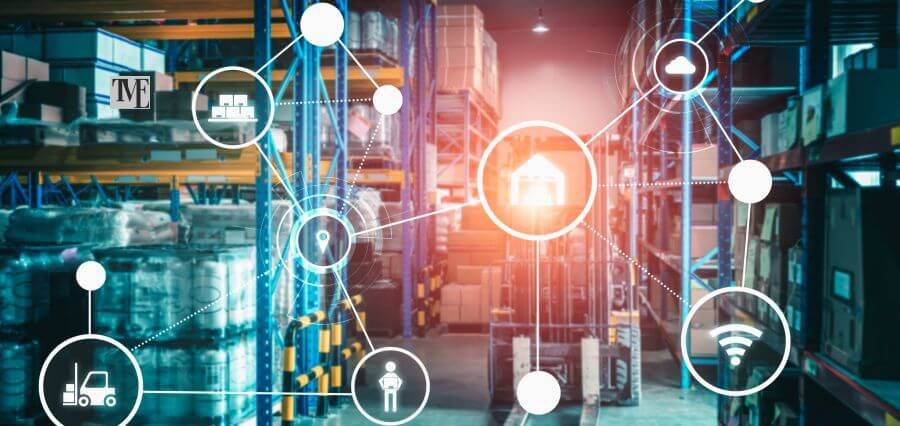
Warehouses once served primarily as storage facilities, but they have increasingly evolved into connected, technology-driven operational hubs. That transition should lead to faster order fulfillment, a sharper sense of what’s on hand, and steadier operational resilience day by day. Consumer expectations like same-day delivery, custom orders, and real-time tracking are pushing warehouse innovation, not just to boost efficiency but also to stay ready in a world that’s very consumer-centric, where competition doesn’t really wait.
Retail, manufacturing, pharmaceuticals, logistics, and e-commerce are sort of rethinking their warehouse operations lately, mostly with automation, AI, robotics, and data analytics. These technologies are helping organizations to save human time, costs, and accuracy and cope better with the disruptions. Smart Warehouses are transforming the way goods move from the supplier to the customer, from autonomous mobile robots that roam the warehouse floors to predictive software that optimizes the placement of goods in the warehouse.
Automation
The most apparent factors for warehouse innovations are automation. Labor-intensive tasks, such as repetitive picking, conveyor, automated storage, retrieval, and autonomous forklift, are being increasingly replaced by robotic picking systems. These systems are intended to speed up picking, packing, and sorting operations while minimizing picking errors. For high-volume facilities, automation also makes sure downtime is reduced, so that they can take on more order traffic without necessarily adding extra staff, in proportion to the growth. This enables businesses to maintain profitability, strengthen their competitive advantage, and run operations more efficiently than before.
One of the sector’s most intractable issues, the shortage of labor, is being addressed by automation. Many warehousing industries continue to face workforce shortages, particularly during peak demand periods. Computers can also take over repetitive and physically tiring chores, so employees get more room to focus on more specialized work such as quality checking, equipment servicing, and customer support. This will provide a more sustainable working model and enhance the safety of the workplace by minimizing on-the-job injuries from repetitive lifting, equipment handling, and repetitive motion.
Data-Driven Intelligence
The implementation of the smart warehouse is not only dependent on the equipment but also depends on the software. Cloud-based warehouse management systems are connected to sensors and IoT devices, giving businesses instant visibility into inventory levels, equipment performance, shipment movement, and the environment. The digital layer helps operators to track every process in a warehouse with more accuracy and allows better decisions to be made faster.
Machine learning, meanwhile, can be used to uncover inefficiencies in delivery paths or routing patterns, it can help predict equipment maintenance needs before they turn into an actual problem, plus it can support smarter staffing decisions based on the order patterns that tend to show up. Sensors also keep an eye on temperature, humidity, and other storage conditions in real time across sectors like food processing, healthcare, and pharmaceuticals. That sort of visibility helps with compliance, and it can also reduce product spoilage. Overall, these approaches are kind of turning the warehouse from reactive operations into a more predictive way of thinking, and that goes a long way toward cutting risk across the entire supply chain.
Sustainable Logistics
Another characteristic of warehouse innovation is sustainability. Companies are increasingly expected to reduce their environmental footprint, through their logistics operations to lessen waste and increase energy efficiency. Smart warehouses are starting to respond, improving their infrastructure and workflows, so they become more eco-friendly and more efficient in real life. New places are often designed with energy-savvy lighting fixtures, rooftop solar panels, an intelligent climate control system, and electric material handling tools, so it feels connected in a roundabout way.
Accurate inventory helps in carrying extra stock, and cuts product waste too. Smarter packaging systems can lower the amount of packaging material used, and make shipping flow more efficiently, such as faster handling or less delay. In fact, new technologies and ideas are helping organizations achieve environmental targets while also providing tangible cost savings. The financial benefits and environment are making this a widely embraced combination among industries.
Conclusion
Smart warehouse innovation isn’t a general idea anymore; it’s very much a now thing for businesses that want to stay agile and resilient in their supply chain. As companies integrate automation and artificial intelligence into the day-to-day work inside a warehouse, the flow of goods gets faster, inventory is tracked with more accuracy, and the whole operation can react quicker to whatever demand is doing. In other words, this transition helps organizations raise productivity, but it also boosts resilience when disruptions happen, labor shortages show up, or when customer expectations start shifting around.
As global supply chains keep getting more and more tangled, the warehouse will play an even bigger, more strategic part in making logistics run smoothly and supporting long-term business growth, in a kind of steady way. Businesses that adopt smart warehouse solutions now are setting themselves up to offer better customer service, strengthen their sustainability results, and stay competitive in a world that keeps changing. In the coming years, the warehouse won’t just support the supply chain anymore. It’s going to be one of its main engines for innovation, robustness, and value creation, in a very direct way.