There are leaders who will not surface when everything runs smoothly. They will emerge during challenging times- when organizations are stretched to their limits, when mergers have forced two conflicting cultures together under one roof, or when a growing company no longer has any clear idea who the leader is. These individuals do not enter such environments equipped with a well-thought-out plan. They have seen such scenarios too often to not know how to handle them. They will listen more than anyone else and then set themselves up for the task of getting things done.
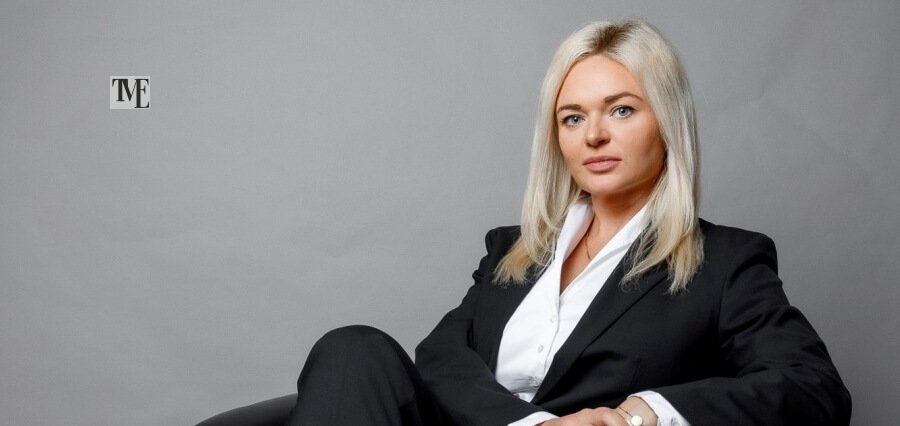
Greta Dirzyte is the CEO of DI.HR, and she happens to be among the most purposeful minds in the world of human resource management and business change. She operates within an intersection of areas which most professionals will not ever be able to claim as their own domain of expertise. This includes the convergence of European order with Emirati ambition, of human resources strategy with business performance, and of an organization and its potential best self. The reason for this exceptional leadership position of Greta Dirzyte does not lie in her knowledge.
Two Worlds, One Vision
Greta’s career began in Europe, where she developed a deep grounding in structured, governance-driven business environments. Over time, she moved toward the UAE, a market that operates on an entirely different energy. Here, deals move fast, growth is expected to be exponential, and the pace of change rarely slows down for anyone to catch their breath.
Most professionals pick one world to work in. Greta Dirzyte built her expertise across both. And that decision became her defining edge.
Today, she leads DI.HR with a philosophy she calls Cultural Synthesis- a practical framework for helping European companies enter and grow within the UAE without losing what made them strong in the first place. The process always starts with understanding. Before any strategy is put on the table, Greta Dirzyte takes the time to study where a company is actually coming from- its culture, its decision-making patterns, and its governance DNA. Because no two European firms are the same. A company from Lithuania thinks differently from one based in Germany or France. That starting point matters enormously.
Greta’s guiding principle is straightforward: translate, don’t transplant. European systems do not fail in the UAE because they are flawed. They fail when they are dropped into a new environment without any adaptation. Greta Dirzyte believes that leadership must bridge mindsets; not just processes. It must combine European discipline with the UAE’s instinct for speed, trust, and proximity. And speed itself needs guardrails. The best organizations she works with run on dual rhythms- rapid, locally empowered decisions operating within clear governance boundaries. That combination gives teams the confidence to move fast without losing control.
HR Is Not a Support Function. It Is a Growth Engine
Most people believe that HR is only involved in hiring, compliance, and maybe a few team-building events. Greta Dirzyte has spent years dismantling that idea, not by arguing against it, but by proving something better.
She sees HR as one of the most direct levers a CEO has for driving commercial performance. Without the right people foundation, there is no sustainable growth, no successful expansion, and no lasting profitability. The foundation is everything. And HR is what builds it.
For Greta, the commerciality of HR plays out in two very concrete directions. On one side, it drives growth by ensuring a business has the right talent, leadership capability, and culture to perform at a high level. On the other side, it protects profitability through stronger workforce design, better retention, higher productivity, and lower structural waste. Both sides matter. Both connect directly to the bottom line.
She challenges CEOs to stop asking whether HR has financial impact; she considers that question already answered; and start asking how clearly that impact is being measured. The indicators she points to are not soft: revenue productivity, organizational efficiency, speed of execution, quality of leadership, and the capacity to scale on a stable base. “Workforce optimization is never about reducing headcount for its own sake. It is about building an organization that is strong enough to grow and disciplined enough to deliver results,” states Greta.
People and M&A: The Part Nobody Plans For
The UAE’s mergers and acquisitions market is one of the most active in the world. Companies are combining, restructuring, and expanding at a pace that leaves little room for careful reflection. And in that rush, the people dimension of a deal is almost always the last thing to get attention, if it gets any at all.
Greta Dirzyte is working to change that. She has developed what she calls a Diagnostic Filter- her personal framework for assessing cultural compatibility before a deal is signed. T
The starting point is always strategy. Before any cultural assessment begins, the merged organization needs absolute clarity on what it is trying to become. That includes a concrete picture of which roles the new company will need and what capabilities those roles require. Without that clarity, cultural discussions stay too abstract to be useful.
The Startup Challenge: Growing Fast Without Falling Apart
Dubai is home to some of the fastest-growing startups in the world. The energy is electric. The appetite for growth is enormous. And the risk of scaling too fast, of building upward before the foundation is solid, is very real.
Greta Dirzyte has seen this pattern more times than she can count. A company doubles its headcount in six months. Revenue is growing. Then cracks start to appear- unclear roles, confused reporting lines, a culture that used to feel close knit now feels fragmented. The growth that looked like success begins to feel like instability.
Her answer is modular organizational structures- frameworks designed to give teams clear ownership and clear responsibility, with enough autonomy to move at speed while staying connected to the direction of the broader organization.
But structure alone is never enough. Greta Dirzyte pairs it with something equally important: the right HR function, present from day one. For smaller companies and early-stage startups not yet ready to build an internal HR team, DI.HR often steps in directly, acting as the company’s HR department, shaping culture, supporting hiring, and building internal capability over time. Once the company is ready, DI.HR supports the transition to an in-house function. The goal is always the same: stability that makes growth sustainable, not chaotic.
Building Organizations That Last
When Greta Dirzyte looks five years ahead, she sees one quality that will separate the companies that thrive in the UAE from those that struggle. It is the ability to hold speed and stability in the same hand, at the same time.
The UAE will keep moving fast. Opportunities will keep multiplying. But only the companies with strong internal foundations- the right leadership, a clear structure, and a culture that can absorb pressure, will be able to keep up sustainably. Companies that chase speed without building stability will eventually break. Companies that build rigidity without flexibility will fall behind. The ones that win will be the ones that learn to do both.
Greta Dirzyte also sees an accelerating shift toward project-based talent models, where businesses blend a strong internal core with flexible access to talent when the moment demands it. DI.HR is already helping companies rethink how they define work and structure their organizations for that future.
But underneath all of it, the frameworks, the strategies, and the models, Greta Dirzyte returns to the same belief that has shaped everything she has built. Companies do not stay strong because of systems. They stay strong because of people. And people do their best work when they are led with clarity, treated with genuine respect, and given the room to grow into more than they thought possible.
That is not a theory for Greta. It is the standard she holds herself to, in every room she walks into, and every organization she helps transform.