

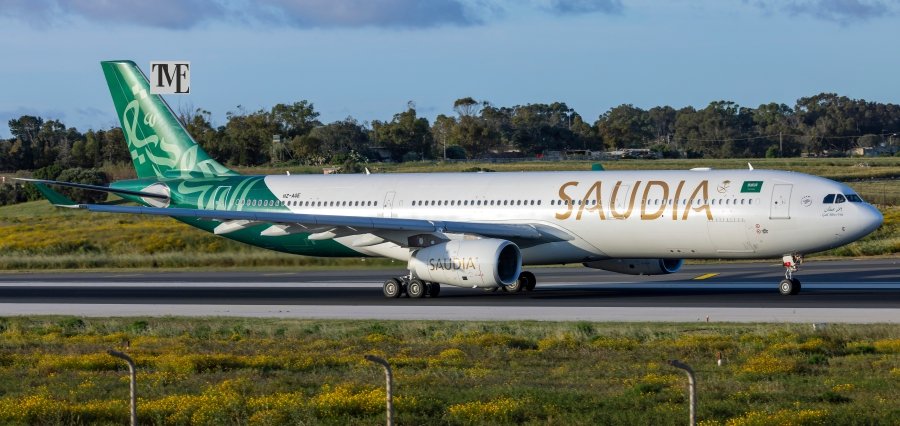
Prime Highlights-
- Saudia became the first airline in the Middle East and Africa to receive the Airbus A321XLR aircraft.
- The aircraft will support international route expansion, passenger comfort and operational efficiency.
Key Facts-
- Airbus A321XLR can operate flights of up to nine hours with a range of around 8,700 kilometres.
- Saudia plans to add 15 Airbus A321XLR aircraft to its fleet by 2027.
Background-
Saudia has received its first Airbus A321XLR, becoming the first airline in the Middle East and Africa to operate the extra-long-range aircraft. The delivery marks a major step in the airline’s fleet expansion strategy as it works to strengthen international connectivity and improve passenger services.
The Airbus A321XLR can operate flights of up to nine hours and offers a range of around 8,700 kilometres. Saudia said the aircraft will allow the airline to expand international routes while improving operational efficiency and matching passenger demand more effectively. The airline added that the aircraft also supports sustainability goals through improved fuel efficiency.
The aircraft introduces key features of “The New Saudia Experience,” focused on passenger comfort, entertainment, connectivity and onboard services. The cabin includes business class suites, upgraded guest seating, larger entertainment screens and onboard charging ports.
Saudia also said passengers will have access to high-speed inflight internet services supporting browsing, streaming and virtual meetings. The airline said the aircraft delivery forms part of its wider growth plans aligned with Saudi Arabia’s Vision 2030 strategy and the national aviation programme. Saudia recently signed an agreement with Airbus for 105 aircraft as part of its long-term expansion plans.
The airline expects to add 15 Airbus A321XLR aircraft to its fleet by 2027 to support tourism, business travel and major international events planned in the Kingdom.
Industry observers said the move strengthens Saudi Arabia’s growing role in global aviation while supporting economic growth, tourism development and improved international travel connectivity across the region.