
Cities are becoming more connected as governments invest in smart technology, digital infrastructure, and sustainable development. Building smart cities takes more than technology. It requires careful planning, good coordination, and an understanding of what communities need.
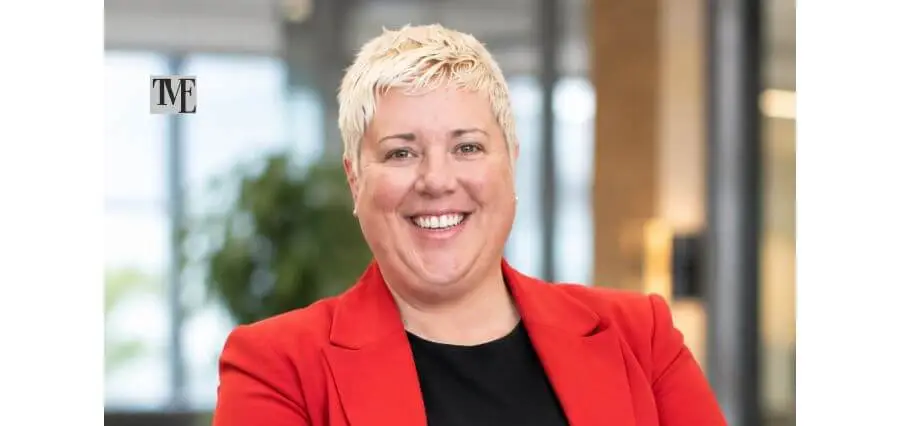
As Program Director and Consulting Partner for PIF, Government and Sovereign Clients (GCC) at Komzo Consulting, Kay Morris-Robertson brings experience across construction management, technology, development, and change management. She has led major smart city projects for the Australian government, worked on large transformation projects in different countries, and advised on complex real estate and infrastructure developments.
Her approach connects long-term development priorities with practical execution, bringing government stakeholders, investors, technology specialists, and project teams together around a shared vision.
Let’s explore how she approaches smart city development, digital innovation, and the transformation of urban environments!
A Career Built Around Smart Infrastructure
Kay’s career has shaped her belief that a truly transforming smart city is not built on technology alone. It is realized at the intersection of geospatial 3D urban planning, technological advancements in the real estate market, and environmental sustainability.
Beginning with a foundation in construction management gave her an understanding of the physical realities of infrastructure. This experience helped prepare her to head four major smart cities for the Australian government, where policies were translated into connected urban environments designed to improve daily life, connectivity, and the long-term well-being of communities.
Her master’s degree in change management further strengthened her ability to work closely with government entities and sovereign families. This work involves helping them articulate their long-term vision and establish the strategic frameworks required to deliver it.
Across development, construction, technology, and transformation, her experience has reinforced the importance of connecting strategic goals with the realities of implementation. Urban development requires an understanding of how infrastructure, technology, governance, and environmental priorities work together. A clear vision must be supported by a framework that enables the different parts of a project to move in the same direction.
Aligning Technology with Long-Term Development
For Kay, large-scale technology and smart real estate programs must support long-term economic and civic priorities rather than short-term technology trends. To keep multibillion-dollar developments aligned and deliver meaningful outcomes for communities, she establishes an overarching corporate governance model.
She founded a portfolio-level team that brings key disciplines together under one structure. Government Relations and PR, alongside Change and Transformation, support political alignment and public readiness. Technology Leads and Sustainability and Environmental teams work on digital twin architectures and net-zero targets, while Real Estate and Construction, together with Urban Planning and Infrastructure, address commercial viability and development requirements.
Through this centralized model, her executive team provided governance and guidance across individual asset packages, including roads, schools, hospitals, event spaces, and commercial and residential developments. The approach helps ensure that separate infrastructure projects remain aligned with the wider program vision and contribute to long-term value for the populations living in these master-planned environments.
This model also connects technology investment with the practical needs of a city. Digital systems, buildings, public infrastructure, and environmental targets must work together rather than operate as separate initiatives. For her, strong governance provides the structure needed to maintain that alignment throughout a complex development. “The key is to ensure that technology supports the overall vision and delivers real value,” she notes.
Managing Complexity Across Multibillion-Dollar Programs
Managing multibillion-dollar programs across the USA, Middle East, Australia, and Europe means working at an immense scale. Kay has overseen hundreds of active builds involving thousands of employees and suppliers. Maintaining control across such programs requires a systematic approach to planning, resource allocation, and stakeholder management.
She establishes an enterprise-level portfolio framework and a centralized Project Management Office (PMO) to align multiple projects under a unified board-level vision. For resource allocation, she uses Work Breakdown Structures (WBS) and Cost Breakdown Structures (CBS), tied directly to critical path methods (CPM). This helps synchronize capital expenditure, material distribution, and workforce deployment across active builds.
She believes that “Strong governance, clear communication, and collaboration are essential to managing complex programs.”
Stakeholder expectations are another important part of the process. Working in sensitive public-private environments requires early engagement with sovereign wealth families, government ministers, and native interest groups. She maintains transparency through commercial tendering, clear quality assurance frameworks, and proactive communication to manage stakeholder needs and reduce political or media friction.
These methods connect the broader strategy with the day-to-day requirements of delivery. They also help keep multiple teams, budgets, suppliers, and project timelines aligned as the program develops.
Keeping Pace with Technology and Change
One of the biggest challenges in smart city development is the speed of technological change. During the multi-year duration of a major project, technology can evolve so quickly that standard integration methods become outdated. Kay believes that strategic planning is critical, but planning alone is not enough. “Leaders must continue to identify, adapt to, and seek out the technologies and materials needed to build cities as close to net-zero as possible,” she notes.
To address this challenge, she establishes agile research loops, working directly with global universities to develop, test, and integrate new technologies on-site as infrastructure evolves. This approach allows innovation to be considered during implementation rather than treated as a separate activity.
People must also be prepared for change. During a $200 million decentralization program, Kay and her teams relocated 10,000 workers into flexible, activity-based town hubs. They supported the transition through business readiness toolkits, internal change champions, and collaborative co-creation loops.
The experience reflects her approach to transformation: digital infrastructure and the people who use it must both be ready to adapt. New systems can only deliver their intended value when organizations and communities understand the changes and have the support needed to work with them.
Building Partnerships for Future-Ready Cities
Staying informed about emerging technologies is an ongoing part of Kay’s work. She follows developments through collaboration with universities and research hubs, particularly in localized data analytics and automation. She also maintains advisory relationships with technology providers such as SAP and Oracle to understand developments in spatial modules, cloud-based enterprise resource planning, and predictive artificial intelligence.
Alongside these partnerships, she uses executive insight platforms to explore new approaches to city management. Her focus is on moving beyond reactive dashboards towards proactive, automated decision-making systems that can support smart city operations.
Collaboration also plays a central role in turning ambitious plans into practical outcomes. She works to secure strategic alignment among stakeholders before construction begins, with clear governance, commercial staging, and baseline planning to bring public and private objectives together.
She also focuses on connecting smart city data layers and critical computing infrastructure, including sustainable, high-capacity data centers, with long-term investment opportunities. These assets can appeal to institutional investors, technology companies, and sovereign wealth funds.
At the same time, she considers community participation essential. Transparent public consultation, change management, and operational transformation help communities understand and support the developments taking place around them. For her, the goal is to ensure that the digital infrastructure becomes part of a connected urban environment that people can use and support over the long term.
Milestones Across Countries and Industries
Several achievements have shaped Kay’s career. In the Middle East, she has collaborated with major sovereign wealth networks, including work for Saudi Arabia’s Private Investment Fund (PIF), aligning major capital investments with national transformation goals and smart infrastructure initiatives.
In Australia, she directed ICT solution architectures, cybersecurity measures, and digital integrations for a multibillion-dollar casino project portfolio along prominent waterfront districts. In the UK, her work included commercial strategy, smart infrastructure due diligence, and real estate development frameworks associated with the London Olympics.
She is also supporting a high-profile real estate transformation program in the UAE, establishing change, governance, and operational readiness frameworks to help turn ambitious urban plans into practical outcomes.
Through Komzo Consulting, her UAE-based consulting business, she provides advisory services connecting physical real estate transformation with future-ready corporate and sovereign frameworks. Her work spans complex portfolios that include casino and entertainment spaces, retail hubs, hotels, residential developments, and theaters.
These experiences have brought together infrastructure, technology, commercial planning, and organizational change. They also reflect the scale of coordination required to deliver major developments across different countries and industries.
Leading Teams While Maintaining Well-Being
Managing demanding programs across multiple time zones requires a disciplined approach to leadership and personal well-being. Kay delegates execution through empowered, decentralized leadership structures, allowing day-to-day operations to continue without constant intervention from senior executives.
Having spent much of her life as a nomad, she is comfortable working in changing environments. She also makes time for professional and social events to decompress and has built a strong network of friends and family across the world.
Fitness and activities such as golf are part of her weekly routine, helping her maintain her health and energy while managing demanding responsibilities. For her, sustaining performance involves not only managing projects and teams effectively but also making deliberate choices about personal well-being.
Advice for Women Leaders in Technology and Urban Transformation
Kay encourages aspiring women leaders to invest in professional networks and build connections with peers and leaders across industries. Visibility and professional relationships can create opportunities and open pathways to new responsibilities.
She also advises women to become experts in their fields. Developing strong technical knowledge and establishing themselves as subject-matter experts can help them contribute with confidence and make their expertise clear within an organization.
Building a trusted team is equally important. Complex transformation programs cannot be managed alone, and leaders need reliable team members and advisors who can offer support, challenge their thinking, and help them make informed decisions.
Finally, she emphasizes the importance of developing a strong personal leadership brand and learning to manage complexity. Major projects can involve demanding political environments and take years to complete. Alongside navigating these challenges, leaders should create a positive work environment where achievements are recognized and success is celebrated.
Shaping the Future of Smart Cities
Looking ahead to 2027 and beyond, Kay is focused on advancing smart city development in the Middle East through artificial intelligence, connected infrastructure, and emerging technologies.
One priority is the development of agentic urban operating systems that move beyond static dashboards. These systems could automatically balance supply chains across countries, optimize green energy grids, and manage predictive municipal maintenance in real time.
She also sees opportunities in modular, net-zero data centers and sustainable infrastructure designed for the region’s commercial and demographic growth. At the same time, more advanced digital twin environments can help commercial districts, residential communities, and economic free zones operate as connected, high-performance environments.
Geospatial 3D modeling and next-generation building management tools will also play a role, connecting environmental performance, physical occupancy, and asset life-cycle management.
For her, the challenge is to bring these technologies together within a clear strategic framework, ensuring that innovation supports long-term development priorities and practical community needs. Her approach continues to connect planning, technology, sustainability, and change management in the pursuit of smarter cities. She believes that “The future of smart cities will depend on how well we connect technology, infrastructure, and the needs of the people who live in them.”
As urban transformation continues, her work remains focused on turning ambitious visions into coordinated programs that can be delivered, adapted, and sustained over time. By bringing together the right expertise, governance, investment, and community participation, she aims to help shape urban environments that are connected, sustainable, and ready for the future.