
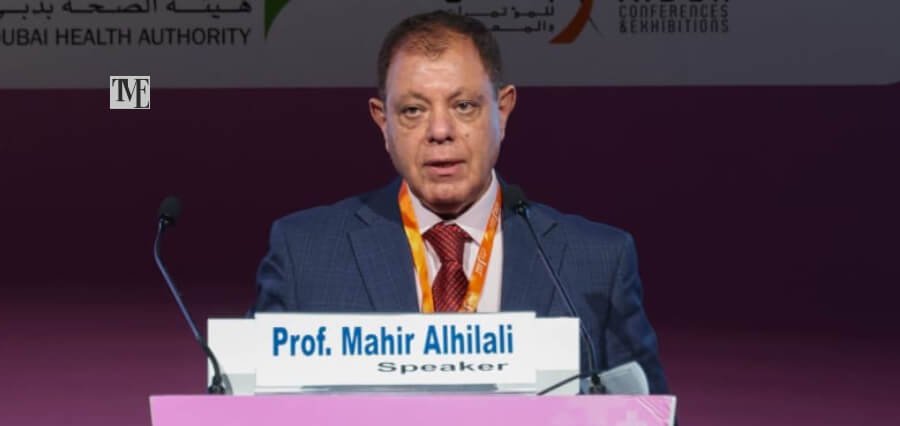
There are professions that are about individual successes, while others are about building systems that remain stronger for future generations. The latter category of professionals is where one places Mahir Al Hilali. It is not enough to talk about the career of a notable clinician whose forte is the science of hematology. Rather, what is important to note here is that his professional experience is an account of how he has come to understand that the scope of healthcare development goes well beyond the clinical setting.
Starting his career in the United Kingdom’s National Health Service, he built up a strong base of knowledge and experience and became trusted by patients and professionals around him in almost thirty years of work. This period made him realize the importance of high standards, safe practice, and evidence-based medicine. However, the larger his scope of responsibility grew, the broader his vision became. Mahir Al Hilali realized that sustainable development in the field is possible only when it is provided by outstanding doctors and leaders who can build a system, develop teams, and implement a strategy in their practice.
In the current times, Mahir Al Hilali continues to be an important physician as well as a healthcare administrator who has managed to integrate his skills and knowledge into the fields of medicine, governance, innovations, and education. In everything that he does, right from developing laboratories to enhancing cancer treatment services, training new professionals to conduct groundbreaking clinical studies, he makes sure that all these efforts serve as proof of his belief that the role of a leader ultimately lies in institution building.
Discover how Mahir Al Hilali’s journey from frontline clinician to visionary healthcare leader is shaping the future of patient care and institutional excellence.
The NHS Years: Where Excellence Became Instinct
Al Hilali’s story begins in the corridors of the NHS, where he spent 27 formative years as Consultant Hematologist and Lead Clinician for Cancer Services at Dorset County Hospital. In those very early years, he defined leadership quite simply: being the most capable clinician in the room and letting excellence set the tone. That instinct, however, matured into something far more expensive.
“Leading the team that built the West Dorset Chemotherapy Unit, and the Dorset Cancer Center, taught me that lasting impact comes from institutions, not individual heroics,” he says.
The Shift into Corporate Healthcare Leadership
That realization carried him out of pure clinical practice and into corporate healthcare leadership, first as Physician Executive at GE Healthcare IT, and subsequently into his current role directing laboratory services across Mediclinic Middle East. The scale of that responsibility is considerable: Mahir Al Hilali led the consolidation of nineteen peripheral laboratories into seven hospital laboratories and two flagship reference laboratories, a restructuring that demanded he think not merely as a physician, but as an enterprise strategist.
“My philosophy rests on a simple conviction: durable leadership sits at the intersection of clinical authority, governance discipline, and strategic vision, and none of the three is sufficient alone,” he explains.
Earning Influence Without Formal Authority
Influence, in Al Hilali’s world, is never assumed from a title; it is earned continuously. When he proposed the Mediclinic Comprehensive Cancer Center to the board in 2012, he had no formal authority to compel investment. What he had instead was a business case robust enough to win backing, and a delivery discipline sturdy enough to carry the project through construction, commissioning, and international accreditation by 2016. “That project taught me that impact is measured years after the decision, not at the moment of approval,” he says.
The center went on to win the Dubai Healthcare City Award for Most Innovative Project in 2020, but for Mahir Al Hilali, the real lesson arrived years earlier: impact is measured long after a decision is approved, not when the ink dries. Directing a laboratory network spanning Dubai, Abu Dhabi, and Al Ain means working daily through hospital directors, clinicians, finance teams, and regulators who answer to no formal chain of command running through his office.
He compensates by being transparent about the reasoning behind every decision, quantifying expected outcomes wherever possible, and staying close enough to implementation to correct course when needed. “Meaningful impact, in my experience, is the product of rigorous preparation combined with the humility to listen before directing,” he adds.
Mentorship as a Lifelong Commitment
Mentorship runs as a constant thread through Al Hilali’s career, and he treats it with the same rigor he applies to clinical governance. As an Educational Supervisor in the UK, he trained 24 consultant hematologists, a role he now extends through his professorship at MBRU. His guiding conviction is that potential emerges through responsibility, not through lectures. “My guiding principle is that potential is discovered through responsibility, not lectures,” he notes.
He hands trainees genuine ownership of a case, a protocol, or a small project early, believing that judgment is forged by making decisions under supervision rather than by simply watching someone else make them. Having personally overseen the care of more than 10,000 new patients, he has also learned that the feedback people remember is specific and honest. “The moments people remember are the ones where a supervisor took the time to explain not just what went wrong, but why,” he says.
Leading Through Uncertainty
Uncertainty has shadowed much of Al Hilali’s career, from establishing new cancer facilities within a resource-constrained NHS system, to commissioning PCR laboratories at speed during the COVID-19 pandemic, to steering a network-wide consolidation that touched staffing, logistics, and patient turnaround times all at once. Across each of these episodes, he has come to rely less on having complete information and more on a clear decision framework: protect the non-negotiables, patient safety, quality standards, regulatory compliance, and allow flexibility everywhere else.
He credits three qualities with keeping his networks safe through genuine crises: intellectual honesty about what remains unknown, structured risk management shaped in part by the MBA thesis he wrote at Henley Business School on risk and quality in cancer care, and the decisiveness to act once the key facts are available rather than waiting indefinitely for perfect clarity.
Treating Change as a Tool, not a Threat
Change, for Mahir Al Hilali, is a mechanism for protecting what should never change, not a threat to it. He has overseen full automation of core laboratory services, introduced a new Laboratory Information System across an entire regional network, commissioned a Molecular Biology Laboratory, and built a Precision Medicine Laboratory offering advanced molecular genetics testing, capabilities that did not exist in the models of care he originally trained under.
Yet beneath all of that transformation, he holds a set of principles firmly in place: clinical governance, evidence-based practice, and accountability to the patient at the end of every process. When his network consolidated from nineteen sites into nine, the technology and logistics shifted dramatically, but the underlying commitment to turnaround time and diagnostic accuracy never moved; it became, in his words, the fixed point around which the entire redesign was built.
Building Trust Across a Diverse Network
Trust, he argues, is built through consistency and transparency sustained over time rather than through any single gesture. Coordinating clinical, operational, and financial stakeholders across Dubai, Abu Dhabi, and Al Ain, often with competing priorities, requires him to communicate decisions and their rationale early and clearly, supported by structured mechanisms such as defined roles, job planning, and continuous performance monitoring. He also works deliberately to create forums where disagreement can surface safely.
As President of the MENA Congress for Metabolism in Health & Disease, and as a session chairman at international congresses, he has observed how the strongest scientific and strategic thinking emerges when people can challenge an idea without challenging a relationship, an openness he tries to carry into executive settings by inviting dissent before decisions are finalized and by remaining visibly willing to change his own position when the evidence demands it.
The Weight of Humility and Self-Awareness
Emotional intelligence, humility, and self-awareness sit at the center of that approach, and Mahir Al Hilali believes they matter more, not less, as seniority increases. Clinical training instills confidence in one’s own judgment, but 27 years of NHS practice followed by corporate leadership within the UAE’s very different healthcare culture taught him the limits of that confidence.
Each transition in his career, from clinician to educational supervisor, from supervisor to physician executive, from physician executive to corporate director, required him to recognize the boundaries of his own expertise and seek out colleagues who knew more than he did in that domain. Practically, this means he separates his strong clinical instincts from areas such as supply chain strategy or enterprise IT architecture, where he leans on specialists. It also means he actively listens when his laboratory staff, clinicians, and administrators signal that a strategy is not working.
Three Practices Behind Sustained Success
Three practices, in Al Hilali’s own account, explain his sustained success. The first is treating clinical and academic credibility as a foundation rather than a formality; he continues to practice as a Consultant Hematologist even while holding a senior corporate directorship, keeping his strategic decisions grounded in frontline reality. The second is lifelong learning, a Doctor of Medicine, an MBA in Health Sector Strategy, Fellowship of the Royal College of Pathologists, and now active research in clinical metagenomics have kept him working from a current knowledge base rather than an outdated one.
The third is building institutions designed to outlast any single leadership tenure, from the laboratory network and the Comprehensive Cancer Center to the MENA Congress for Metabolism in Health & Disease. “Sustained success, in my experience, comes from principles applied consistently across very different environments rather than reinvented in each one,” he says.
The Achievements He Values Most
Looking back, Mahir Al Hilali points to the Comprehensive Cancer Center, carried from board proposal in 2012 through construction, commissioning in 2016, and four years of operational leadership, as the achievement he returns to most often, because it taught him that institution-building depends less on the initial vision than on the discipline required to protect that vision across years of construction, accreditation, and operational maturity.
He is equally proud of transforming the Mediclinic laboratory network while protecting patient turnaround times throughout, and of mentoring 24 consultant hematologists whose judgment now extends his influence far beyond any single building or system.
Looking Ahead: The Next Frontier
Looking ahead, Al Hilali’s research into shotgun metagenomic sequencing of the gut microbiome, exploring its potential to predict and prevent chronic disease, mitigate biological ageing, and enhance the efficacy of chemotherapy and immunotherapy, signals where he believes healthcare strategy is heading next, and he wants to bring that science into an executive role at a multinational organization, translating it into scalable, accredited clinical services as he did with the Comprehensive Cancer Centre.
He remains equally invested in developing the next generation of physician-executives, aiming to build structured pathways that give clinicians the governance, strategic, and financial literacy needed to lead at the network and board level, not as a departure from clinical practice but as its natural extension. “My aspiration is to spend the next phase of my career doing at a multinational scale what I have done regionally: building institutions, setting standards, and developing the people who will carry both forward,” says Mahir Al Hilali.