

Prime Highlights-
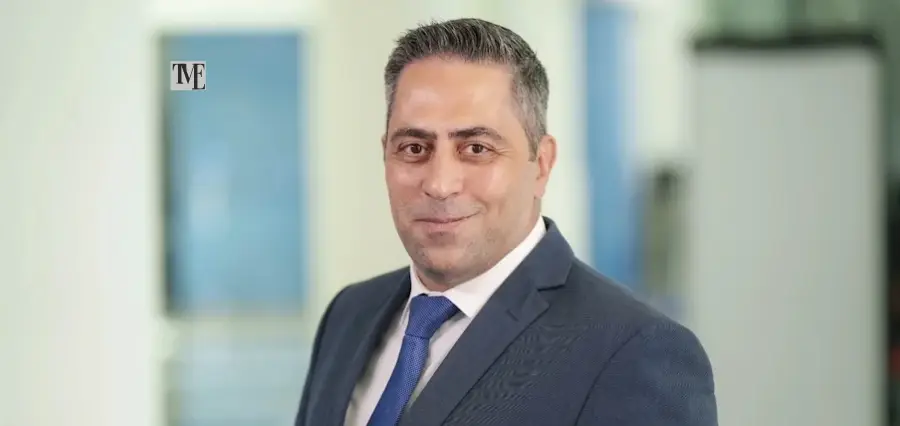
- George Bou Mitri, Honeywell Technologies president for the region, says Middle East businesses are moving from automation toward autonomous operations powered by AI.
- Honeywell’s Three Ds framework, data, domain knowledge and deterministic AI, forms the foundation for safe, scalable autonomy across industries.
Key Facts-
- PwC research shows 73 percent of Middle East manufacturers expect data capture and analytics to be largely automated within five years.
- Honeywell also supports Msheireb Downtown Doha’s smart city project with sensor-driven urban management.
Background-
George Bou Mitri, president of Honeywell Technologies for the Middle East, Africa, Türkiye and Central Asia, said the region’s businesses are moving from automation toward genuine autonomy, building on advances in cloud computing, 5G and AI.
He said automation follows fixed instructions, while autonomous systems sense changing conditions and respond in real time, with people retaining oversight over higher-value decisions.
Bou Mitri said autonomy is becoming a strategic priority as organizations manage increasingly complex operations while working to improve efficiency and stay competitive, adding that autonomous systems help preserve valuable knowledge as experienced workers retire. PwC research shows 73 percent of Middle East manufacturers expect data capture and analytics to become largely automated within five years.
Governments and businesses across the region are investing in connected, intelligent operations spanning industry, airports, energy, healthcare, data centers and smart cities, including an AI-powered control room built with Borouge in Ruwais.
Bou Mitri outlined Honeywell’s Three Ds framework, data, domain knowledge and deterministic AI, as the foundation for safe, scalable autonomous operations, delivered through the Honeywell Forge platform.
He said organizations succeeding at scale start by assessing their current systems and digital maturity, then build a phased roadmap tied to measurable outcomes such as higher production and lower operating costs, with safety and cybersecurity central throughout.
Looking ahead, Bou Mitri said autonomy will increasingly support workforce growth, helping less experienced staff perform with the insight of veteran professionals while reducing errors and preserving knowledge across the region’s industries.