

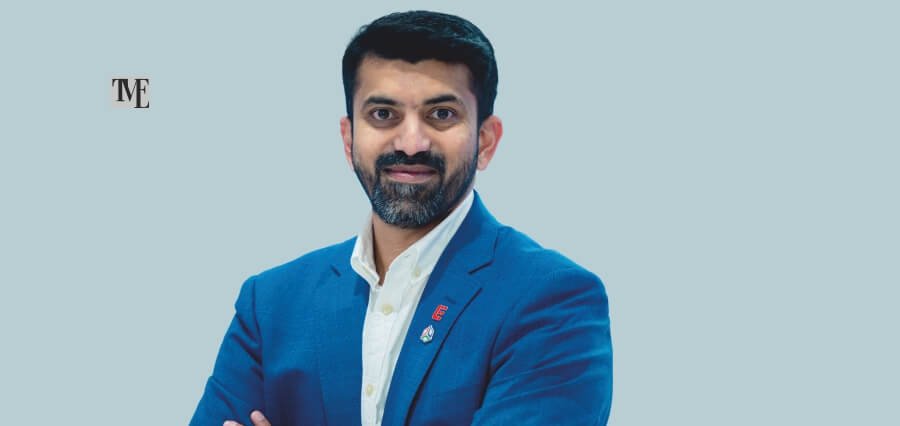
Great leaders cannot be defined simply through their accomplishments. Rather, great leaders are those who have had certain experiences in life that have helped them develop a particular perspective towards leadership. For Frelix Ummer, who serves as the Chief Operating Officer at DCV Industries, such an experience occurred when he was leading an IT infrastructure project that required the involvement of many partners, customers, and stakeholders. During that period of time, his major concerns were focused more on project management aspects, resource management, and completion of the project within the schedule. But one simple piece of advice led him to think of leadership rather than project management.
Upon reflection, Frelix Ummer understood that being a leader was not about giving people responsibilities; rather, it was about encouraging them to take ownership. While responsibilities could be delegated, accountability was achieved by instilling trust and empowerment among people. This approach is still the one he follows even today, in his efforts to revolutionize Artificial Intelligence, Edge Computing, Internet of Things, and next-generation data centers.
Building the Future of AI Infrastructure
The Internet of Things (IoT) and traditional data centers have often been seen as fundamentally different technologies. IoT is decentralized, generates large volumes of data, and operates at the edge. In contrast, data centers have traditionally focused on centralized computing, storage, and management. For years, these two approaches were viewed as complementary, with each addressing the other’s limitations.
Frelix Ummer believes this perspective is no longer relevant. According to him, Artificial Intelligence (AI) and real-time analytics have transformed the way organizations process data. The focus has shifted from simply connecting devices to centralized data centers to processing information closer to where it is generated. This approach reduces latency, enables faster decision-making, and improves operational resilience. He believes the future lies in creating an intelligent connection between the edge and the core rather than choosing one over the other.
Recognizing this shift, DCV Industries has developed a range of rapidly deployable infrastructure solutions under Frelix’s leadership. These include All-in-One (AIO) Data Centers, AI Edge Platforms, AI Super PODs, Mobile Data Centers (MDCs), and Modular Data Centers. These solutions bring AI-ready infrastructure closer to the source of data while maintaining enterprise-grade reliability and scalability. The company’s portfolio reflects its vision for the future of digital infrastructure rather than simply responding to current market demand.
As a leader driving this transformation, Frelix Ummer balances two essential priorities: agility and discipline. IoT environments require innovation, experimentation, and the ability to adapt quickly. Data centers, on the other hand, require reliability, strong security, and robust governance to ensure uninterrupted operations. Instead of viewing these priorities as conflicting, Frelix Ummer sees them as complementary. He believes successful infrastructure leaders must excel at managing both to build resilient and future-ready digital ecosystems.
Integrity as the Foundation of Leadership
When asked which leadership value he will never compromise on, Frelix Ummer answers without hesitation: integrity. He believes technology continues to evolve rapidly, making technical knowledge and skills constantly change. The expertise that was valuable a few years ago often needs to be updated to remain relevant. However, integrity remains timeless. It influences how leaders make decisions, serve customers, and build trust within teams and business partnerships.
According to Frelix Ummer, integrity is especially important in an industry that manages critical infrastructure, long-term investments, and projects that extend over many years. He considers it a fundamental quality that supports sustainable growth and strong business relationships.
“Technical expertise may create opportunities, but integrity is what sustains long-term relationships and lasting success. Over time, trust becomes one of the most valuable assets an organization can possess,” he says.
Leading with Empathy
Leadership is truly tested during challenging times. Frelix Ummer recalls one of the defining moments of his career while leading a mission-critical infrastructure project during a period of geopolitical uncertainty in the Middle East.
The technical strategy for the project was well planned. However, unexpected challenges soon emerged. Travel disruptions left team members stranded, supply chain issues threatened project timelines, and growing safety concerns created uncertainty for everyone involved. Despite these difficulties, the project remained a high priority for the customer. The team needed more than technical expertise. They needed strong and reassuring leadership.
Frelix Ummer chose to focus on supporting his team. He listened to their concerns, communicated openly about the situation, and remained transparent about both the known and unknown factors. He adjusted responsibilities where necessary and ensured that communication remained clear and consistent throughout the project.
The team completed the project. More importantly, they remained united despite the challenges. Their trust, collaboration, and shared commitment enabled them to overcome a difficult situation that could easily have affected both morale and performance. The experience reinforced Frelix’s belief that while technology can solve technical challenges, empathy, trust, and genuine human connection are what help teams overcome extraordinary circumstances.
A Structured Approach to Decision Making
Leadership is often defined by the ability to make sound decisions with incomplete information. For Frelix Ummer, this is a regular part of leading large and complex infrastructure projects at DCV Industries, where complete certainty is rarely available.
He follows a structured five-step decision-making process. First, he gathers all available facts. Next, he evaluates the potential risks and opportunities. He then seeks input from people with different perspectives to gain a broader understanding of the situation. After that, he ensures the decision aligns with the organization’s values and long-term strategic goals. Finally, he closely monitors the outcome and makes adjustments whenever necessary.
Frelix Ummer believes the final step is often overlooked by many leaders. In his view, decision-making does not end once a choice is made. It requires continuous monitoring and the flexibility to adapt as circumstances change.
A key part of his approach is to clearly define the desired outcome before making a decision. He evaluates whether the expected result aligns with the organization’s ethics, core values, strategic direction, and long-term vision. If there is clear alignment, he moves forward with confidence. If not, he takes more time to assess the situation.
Developing Future Leaders
Frelix Ummer believes every project at DCV Industries is more than a business assignment. He sees each one as an opportunity to identify and develop future leaders within the organization.
While technical expertise is important, he believes adaptability and innovation are the qualities that truly distinguish effective leaders. He looks for individuals who can quickly respond to changing circumstances and focus on finding new solutions instead of holding on to outdated approaches. In an industry shaped by Artificial Intelligence, Edge Computing, automation, and digital infrastructure, technical skills must be continuously updated.
As a mentor, he encourages emerging leaders to adopt a future-focused mindset. Rather than asking, “How have we always done this?“, he urges them to ask, “How should we do this for the future?” He believes this shift in thinking enables organizations to innovate, remain competitive, and adapt to changing market demands.
Frelix Ummer also believes employee well-being is closely linked to organizational performance. In his view, high performance and employee welfare support each other rather than compete with each other. He emphasizes the importance of setting clear priorities, defining expectations, and helping employees understand how their work contributes to the organization’s broader goals. This clarity allows teams to perform with greater confidence while reducing unnecessary stress.
At DCV Industries, accountability is supported by coaching, mentoring, and continuous professional development. Frelix Ummer believes that employees who feel trusted, valued, and empowered remain engaged, build resilience, and consistently deliver results that go beyond what processes and systems alone can achieve.
Balancing AI Innovation
Frelix Ummer views the rapid growth of automation and Artificial Intelligence (AI) with a balanced perspective. As DCV Industries develops AI-ready infrastructure for customers while also using AI across its own design, engineering, production, and operations, he believes technology should be adopted with a clear purpose.
When introducing new technologies to regional teams, Frelix Ummer focuses on one key question: How does this create value for customers and improve everyday work? He believes that when employees understand the practical benefits of a new technology, they are more likely to embrace it. In his view, successful technology adoption is also a process of cultural transformation.
While AI can support complex technical decisions and improve operational efficiency, it cannot replace the human ability to understand people, make ethical decisions, and consider the broader impact of those decisions on organizations and society.
“The future belongs to organizations that combine technological intelligence with human insight, ensuring that AI-driven innovation is guided by ethics, responsibility, and enduring human values,” he says.
Advancing Ecosystem Leadership
As Frelix Ummer looks to the future, he believes the most important leadership capability to develop is ecosystem leadership. He sees this as a critical requirement as the Middle East continues to expand its digital infrastructure through sovereign cloud initiatives, hyperscale data centers, AI infrastructure investments, and next-generation digital economies. According to Frelix Ummer, these large-scale developments require strong collaboration among governments, technology providers, cloud operators, telecom companies, investors, and enterprise customers.
He believes collaborative leadership is the foundation of this approach. However, ecosystem leadership goes a step further. While collaborative leaders build effective partnerships, ecosystem leaders focus on creating long-term value for the entire network of stakeholders. Their success is measured not only by the achievements of their own organization but also by the positive impact they create across the broader ecosystem.
Looking ahead, Frelix Ummer aims to strengthen his ability to lead across organizations, industries, and cultures. He believes building trusted partnerships will be essential for accelerating innovation and supporting sustainable growth across the region. For him, this is not simply a professional goal but a leadership responsibility that will help shape the future of digital infrastructure.