

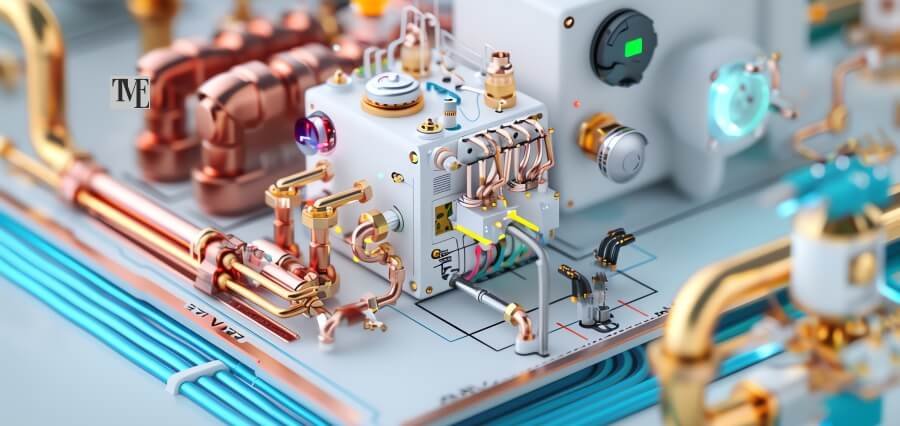
With the growth of the economy being technologically oriented, there is a need for the continuity of processes to conduct business effectively. This is done by using well-developed IT systems that will guarantee the constant running of applications and data protection. In light of further expansion into the online space, effective energy management systems and heat control have become more important than ever. Modern companies face rising costs of energy consumption, problems with sustainability, and rapid introduction of various technologies like artificial intelligence, cloud computing, edge computing, and automation.
This implies that demand for effective and reliable solutions for providing energy and cooling increases. Companies that are ready to invest in integrated infrastructure have good chances to become more productive, reduce risks and to create environments that will make it possible for them to flourish. Modern process management requires managers to adopt an integrated approach that would include considerations of reliability, efficiency, sustainability, and flexibility.
Reliable Infrastructure
The presence of a strong infrastructure is the bedrock of every thriving business. In data centers, manufacturing plants, hospitals, financial institutions, or any other commercial building, a steady flow of electricity and temperature regulation is very critical in maintaining stability. Lack of such conditions would result in system failures, production delays, losses, legal challenges, and loss of client trust. In an era where businesses are increasingly becoming digital and dependent on such systems, the cost of infrastructure failure becomes even more significant. Comprehensive Power and Cooling Solutions tackles these challenges by stitching together a dependable power backup, a more intelligent observation layer, precise cooling control and advanced energy stewardship systems into one unified framework.
Through the integration of such systems, equipment works under favorable conditions without experiencing downtime. Real-time monitoring allows an organization to be aware of any problem and avoid bigger complications, whereas automatic controls provide improved reaction under changing conditions. Such a solution not only helps in avoiding failures, thus improving system reliability, but also in offering business continuity. The infrastructure is not only important for securing the business assets but also for building confidence to expand and transform digitally.
Efficiency and Sustainability
Efficiency in operations has taken on a strategic importance for companies as they strive to increase their profitability as well as meet their environmental obligations. Increased energy consumption as well as cooling needs have made energy management an integral part of contemporary infrastructure development. Companies are employing smart systems that constantly keep tabs on energy consumption, optimize cooling efficiency and give valuable information that can lead to making better decisions. Modern power and cooling solutions greatly enhance the aspect of sustainability due to energy efficiency with no loss in reliability.
Through advanced cooling techniques, automation, intelligent power distribution solutions, and energy-efficient devices, wastage of energy is avoided, and costs are reduced. Another way by which predictive maintenance improves effectiveness is by identifying possible issues with the equipment before they become costly repairs. Through this, the equipment becomes more durable while reducing maintenance costs and environmental harm caused by resource inefficiency. Sustainability has emerged as an important performance measurement parameter for companies. Environmental responsibility has become an integral part of corporate success and performance.
Driving Future Growth
The rate at which digital transformation is occurring keeps influencing how businesses operate across all sectors. AI technologies, automation, cloud, Internet of Things, and high-performance computing have been generating increasing requirements for infrastructure. Conventional methods of managing power and cooling do not seem to be enough to sustain these requirements. Businesses need scalable solutions that can grow with the organization as well as continue performing regardless of the changing environment.
Modular infrastructure design allows organizations to increase their capacity without interfering with existing activities. In addition, intelligent monitoring systems provide real-time information on the status and efficiency of system functions. This helps decision makers at facilities make informed decisions regarding optimizing their resources. Moreover, the organization gains a high level of adaptability towards adopting any new technology or responding to changes in its business environment. Future-oriented organizations understand that the investment in infrastructure goes beyond helping organizations perform better every day. Such investments are strategic and help them compete and innovate.
Conclusion
An infrastructure system that can withstand shocks has evolved beyond just being an operational need. The infrastructure becomes a strategic asset that allows the company to ensure its continuity of operation, increase productivity, and embrace changes in the market environment with confidence. With intelligent integration of power management systems with effective cooling technologies, it becomes possible for companies to safeguard their operations, manage their energy use efficiently, and operate in a consistent environment.
The pace at which the digital revolution is occurring is very fast; it is going to become critical for corporations to understand how to integrate reliability, efficiency, and sustainability to succeed. Companies that adopt Power and Cooling Solutions would be able to innovate and survive without having any effect on efficiency. Only through investments in smart infrastructures, scalable technologies, and energy management would the companies be able to create their resilience and competitiveness.