
The world of facilities management is witnessing a paradigm shift as companies begin to focus on operational resilience, technological advancements, and sustainability. In a scenario where customer requirements continue to change, supply chains face disruption, and the demand for advanced infrastructure keeps growing, facilities management is no longer confined to basic maintenance practices. This field now plays a pivotal role in improving asset efficiencies, creating better occupier experiences, and facilitating business growth through technology.
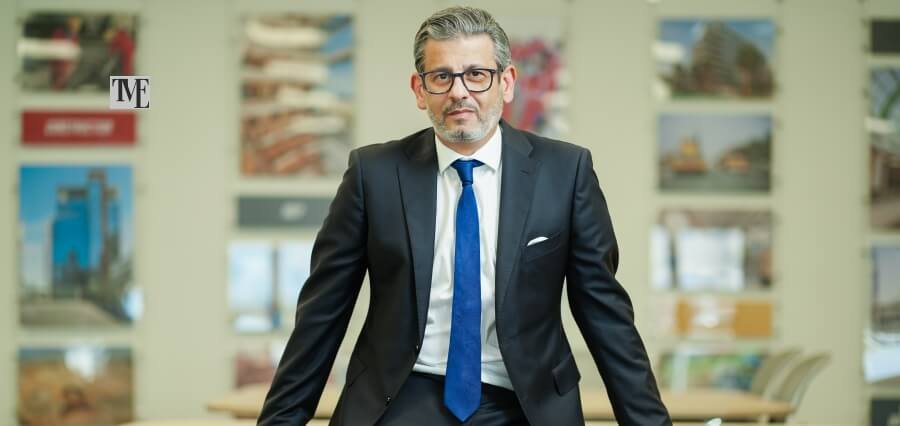
In an exclusive interview with Insights Success Magazine, Josegh Anthony, General Manager at Khansaheb Facilities Management, speaks about his experience gained in his distinguished two-decade-long career spanning aviation, financial services, and the real estate sector in both the UAE and the KSA. Josegh Anthony talks about how technology and strong leadership can help companies overcome operational challenges while fostering sustainable growth.
Looking back at your 20-year journey, what was the most significant “operational crisis” you faced that ultimately strengthened your leadership resolve?
One of the most defining operational challenges I faced came during a period of large-scale disruption where service continuity, supply chain reliability, and workforce stability were all under pressure simultaneously. It tested not just systems, but leadership itself. We had to make fast, data-informed decisions while ensuring our teams remained supported, motivated and aligned. What strengthened my determination was recognizing that resilience is built through people. By empowering teams, maintaining transparent communication, and leaning into technology for visibility, we were able to stabilize operations and even improve efficiencies. That experience reinforced my belief that leadership is not about control during crisis, but about clarity, trust, and adaptability.
You are proficient in both English and Arabic. How has this linguistic bridge facilitated deeper “stakeholder engagement” and helped you navigate government regulatory requirements in both the UAE and KSA markets?
Being fluent in both English and Arabic has been instrumental in building trust and credibility across diverse stakeholder groups. In markets like the UAE and KSA, effective engagement goes beyond technical expertise it requires cultural understanding and clear communication. This linguistic bridge eliminates ambiguity and adds affinity to the engagement with government authorities, particularly when navigating regulatory frameworks where precision and clarity are critical. Ultimately it goes beyond language but rather understanding the operating culture.
You describe yourself as “dedicated and assertive.” In a service-oriented industry like FM, how do you balance assertiveness with the “high customer service aptitude” required to maintain long-term client rapport?
Assertiveness in FM is about setting clear standards and ensuring accountability, while customer service is about empathy and understanding. The balance lies in being firm on service quality but flexible in approach. I embrace listening first, and understanding client needs, challenges, and expectations before defining solutions. Ultimately, trust is built when commitments are consistently delivered while maintaining transparent communication.
Under your leadership, how has Khansaheb FM transitioned from traditional maintenance to a “Business Growth” model that incorporates feasibility studies and design reviews?
The transition has been driven by a shift in mindset from reactive service delivery to proactive value creation. Facilities management today must contribute at the earliest stages of an asset lifecycle. At Khansaheb FM, we’ve integrated our expertise into feasibility studies and design reviews to ensure maintainability, efficiency, and sustainability are embedded. By doing this, we help clients optimize lifecycle costs, improve asset performance, and avoid operational inefficiencies. This approach positions Khansaheb FM not just as a support function, but as a strategic partner in business growth, which further confirmed the need to integrate digital twin technology in our facilities management solutions.
You have managed FM for Aviation, Financial Institutions, and Real Estate. What is the one “universal truth” about facility management that remains constant across these vastly different sectors?
The one constant is that FM is fundamentally about people. Regardless of the sector, our role is to create environments that are safe, efficient, and conducive to productivity to wellbeing. While the technical requirements may vary, the expectation remains the same which is to deliver a seamless, reliable experience. Managing assets is important, but managing expectations and human experience is what truly defines success in facilities management.
Given your expertise in Supply Chain and Risk Assessment, how did you re-engineer Khansaheb’s Facilities Management procurement strategies to survive the global disruptions of recent years while maintaining profitability?
We took a strategic approach to procurement by diversifying supplier networks, strengthening local sourcing capabilities, and leveraging data for better demand forecasting. Risk assessment became central to every procurement decision. We also focused on building long-term partnerships rather than transactional relationships, which improved reliability during disruptions. By integrating technology into supply chain management, we enhanced visibility and agility, allowing us to maintain service standards while controlling costs and protecting profitability.
You are technologically proficient in Digital Twin, BIM, and SCADA. How is Khansaheb currently using Digital Twins to move from “reactive” maintenance to “predictive” asset management in mega-properties?
Digital Twin technology has been a gamechanger in how we manage assets. By creating real-time digital replicas of physical environments, we gain continuous visibility into asset performance. This allows us to move from reactive maintenance to predictive strategies identifying potential failures before they occur. In mega-properties, this translates into reduced downtime, optimized maintenance schedules, and improved lifecycle management. It also enhances decision-making by providing data-driven insights that improve efficiency, service quality and ultimately occupant satisfaction.
You have a proven track record of imparting best practices across multi-sectors. How do you ensure that your “innovation best practices” reach the frontline technicians and aren’t just limited to the boardroom?
Innovation only creates value when it is implemented on the ground. We ensure this through structured training programs, clear communication, and practical integration into daily workflows. We simplify complex technologies into actionable processes and empower our frontline teams with the tools and knowledge they need. Regular feedback loops also help us refine these practices. By fostering a culture of ownership, we ensure that innovation is not seen as top-down, but as something every team member contributes to.
For a young professional starting in Power Engineering Technology today, what is the one “Business Analysis” or “Financial Analysis” skill they must learn to eventually reach a General Manager position?
One critical skill is the ability to understand and analyze lifecycle costing. It’s not just about the upfront cost of an asset, but its long-term operational and maintenance implications. A strong grasp of financial analysis particularly cost-benefit evaluation and return on investment enables professionals to make strategic decisions that align technical solutions with business outcomes. This is what ultimately differentiates technical expertise from leadership capability.
With your focus on Energy & Environmental initiatives, what is your “Impact” goal for Khansaheb Facilities Management regarding carbon neutrality across your managed portfolio by 2030?
Our goal in Khansaheb FM is to significantly reduce carbon emissions across our managed portfolio by 2030 through a combination of energy optimization, smart technologies, and sustainable operational practices. We are actively integrating digital tools, improving energy efficiency, and enhancing indoor environmental quality across our clients’ assets. Carbon neutrality is an ambitious target, but our focus is on measurable progress driving continuous improvement while aligning with broader environmental goals and industry responsibilities.