

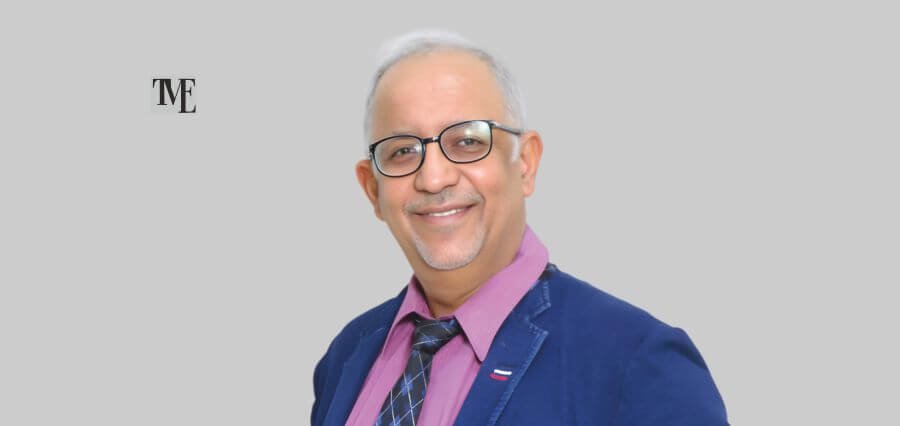
Every great institution begins with a moment of refusal, a quiet, firm decision made by one person who recognizes a problem and decides not to ignore it, rather than with a blueprint. As a cardiologist on the ground in the Eastern Province of Saudi Arabia, Dr. Hussain Al-Nezir witnessed patients pursuing care that ought to have been provided earlier. For specialized cardiac procedures, people were traveling great distances. Families were traveling, wasting time that they didn’t have. The healthcare system had just not kept up with the region’s tremendous economic activity and population growth. He clearly saw it. And he wouldn’t turn his head.
What Dr. Hussain Al-Nezir built in response, starting with a single cardiac center in 2007 and expanding over nearly two decades into the multi-specialty Dar Afia Hospital, is a testament to what focused, patient-first leadership looks like in practice. He is not a man who built a hospital to build an empire. He built one because people needed it. That distinction shapes everything about how Dar Afia operates, what it stands for, and where it is going.
The Decision That Started Everything
In 2007, Dr. Hussain Al-Nezir founded the Cardio-World Center in the Eastern Province- a move that was as much a statement of principle as it was a professional step forward. The center was built on advanced technology, evidence-based medicine, and a culture of compassion that put the patient ahead of the procedure. His guiding conviction was simple: no patient should lose time when it comes to the heart. In a field where delays cost lives, that was not just a philosophy. It was a clinical imperative.
The center filled a gap that the community had felt for years. Patients who had previously navigated long distances for specialized cardiac care now had access to world-class diagnostics and interventional procedures close to home. Word spread. The patient volume grew. And with that growth came a deeper insight that would eventually reshape the entire institution.
Growth That Followed the Patient, Not the Business Plan
Cardiac medicine taught Dr. Hussain Al-Nezir something quickly: the heart does not exist in isolation. His patients were arriving with diabetes, hypertension, kidney conditions, and a host of other illnesses that needed equal attention. Treating one without addressing the others was, in his view, incomplete medicine. So, the center began to expand, not according to a growth strategy mapped out in a boardroom, but in direct response to what the people walking through his doors actually needed.
By 2008, the clinic had taken on a second significant role. Major industrial and corporate sectors in the Eastern Province began partnering with the center for workforce health programs and occupational medical services. For Dr. Hussain Al-Nezir, this opened an entirely new perspective. He was no longer just looking after individual patients in a consultation room. He was contributing to the health of entire communities- workforces that kept the region’s economy moving. That shift in scale changed how he thought about healthcare, and it changed what he believed a medical institution could and should do.
That same year brought international recognition. Governments including Canada, Australia, and New Zealand selected the center as their designated international panel medical facility in the Eastern Province- a role that required expanding services across a far broader range of medical and diagnostic disciplines. Dr. Hussain Al-Nezir built those capabilities. The center had proven something important: a regionally rooted institution, led with the right values, could meet international standards without compromising its local identity.
Four Principles That Never Changed
As the institution evolved from a cardiac clinic into a medical complex, and eventually into Dar Afia Hospital, Dr. Hussain Al-Nezir guided every stage of that transformation through four principles he has held without exception.
Clarity of purpose: Every department at Dar Afia, from the cardiac catheterization lab and ICU to the NICU, bariatric surgery unit, early cancer detection centre, and advanced radiology suite, was introduced because the community genuinely needed it. Growth here has always been driven by necessity, never by novelty.
People over infrastructure: Buildings and equipment matter, but Dr. Hussain Al-Nezir has always been clear that healthcare ultimately depends on people. Skilled, committed professionals working collaboratively have been at the centre of his hiring and culture-building philosophy from day one.
Sustainable excellence: Quality cannot be something that shows up on inspection days and disappears afterward. At Dar Afia, it is systematic and measurable; built into every clinical process, from the cardiac catheterization labs and automated diagnostics to the operating theatres and nursing protocols.
A healing environment: Dr. Hussain Al-Nezir paid deliberate attention to how the hospital looks, feels, and functions as a physical space. The design of Dar Afia, its interiors, its views, and its overall atmosphere, is intended to reduce anxiety and project calm. He believes, with conviction, that healing is shaped by the environment as much as by treatment.
Dar Afia Hospital: Built for a City That Never Slows Down
Dammam is the capital of Saudi Arabia’s Eastern Province and one of the Kingdom’s most strategically important cities. It is a place of industrial weight, urban growth, and diverse population, and its healthcare needs to reflect that complexity. Families, working professionals, industrial workers, tourists, and patients requiring highly specialized care all share the same city. Dr. Hussain Al-Nezir built Dar Afia to serve all of them.
The hospital operates today as a boutique, state-of-the-art, multi-specialty institution that covers an extraordinarily wide range of services: cardiology, gastroenterology, urology, dermatology and cosmetology, plastic surgery, emergency medicine, neonatology and NICU, obstetrics and maternity, nephrology and hemodialysis, radiology, bariatric and general surgery, and a lot more. The clinical infrastructure includes advanced cardiac laboratories, 16-slice CT imaging, digital mammography, lithotripsy systems, fully automated diagnostics, and modern operating theatres equipped for complex procedures.
Dar Afia was not built to be the largest hospital in the region. It was built to be the most complete; a place where a patient does not need to go anywhere else.
Steady Hands in a Complicated Business
Building a multi-specialty hospital from scratch, in one of the world’s most regulated healthcare environments, is not a smooth process. Dr. Hussain Al-Nezir navigated licensing, compliance, operational scaling, and financial planning- often simultaneously, often under pressure. Regulations shifted. Market conditions changed. Healthcare demands evolved in ways that required constant adaptation.
His response to each challenge was consistent: strengthen the governance, refine the systems, and keep the long-term vision in clear view. He has always treated difficulty as a signal to sharpen strategy rather than a reason to retreat. That discipline has allowed Dar Afia to grow steadily without losing the values it was founded on.
Multidisciplinary collaboration has been another area of deliberate focus. Departments at Dar Afia do not operate as separate silos. They function as one team. Structured communication channels, joint case reviews, and integrated electronic medical records allow specialists to coordinate across disciplines in real time. In the NICU, neonatologists, pediatricians, and specialist nurses work in close alignment on every high-risk newborn. In the operating theatres, surgeons, anesthesiologists, and critical care teams move within a seamless, rehearsed clinical workflow. A dedicated training centre supports ongoing professional development across the entire hospital.
Technology That Serves
Dr. Hussain Al-Nezir holds a clear and unambiguous position on technology: it exists to improve outcomes for patients, not to impress observers. Every investment in clinical infrastructure at Dar Afia is measured against that standard. The goal is not a more impressive facility. The goal is to deliver better care.
But clinical excellence without accessibility, in Dr. Hussain’s view, is an incomplete achievement. Dar Afia maintains partnerships with major insurance providers across the Kingdom, making quality care reachable for a broad cross-section of the community. Home healthcare and telemedicine services extend care into homes and remote locations. Industrial health programs and periodic check-ups bring preventive medicine into the lives of people who might not otherwise prioritize it. The hospital’s reach, by design, extends well beyond its own walls.
What Success Actually Looks Like to Dr. Hussain
While definining success at Dar Afia, Dr. Hussain Al-Nezir does not mention revenue or capacity. He talks about a patient who walked in critical and walked out recovered. A premature newborn who went home healthy. A family who came in frightened and left with clarity and a plan. An injured industrial worker, who returned to his job. These are the outcomes he measures himself against; not as sentiment, but as the actual purpose of the institution.
As Chairman, he sees his role as a guardian of values and standards. Leadership in healthcare, he believes, carries a weight unlike most other industries, because every decision, whether operational, financial, or clinical, eventually lands on a human life. He does not treat that lightly.
That philosophy is woven into Dar Afia’s culture at every level. Patient-centred care is not a marketing position here. It is embedded into how staff are recruited and trained, how departments communicate, how specialists approach a diagnosis, and how the hospital evaluates its own performance. Respect, compassion, teamwork, and accountability are not values on a poster. They are the way the work gets done.
The Road Ahead: Ambitious and Grounded
Dr. Hussain Al-Nezir is already focused on the next chapter. His ambition is to see Dar Afia earn recognition as one of the most trusted healthcare providers in the Kingdom, with a measured and strategic expansion across the GCC. The roadmap includes deeper integration of digital health tools, data-driven clinical decision-making, stronger preventive health programs, and a continuous quality improvement framework.
He is clear-eyed about how fast the sector is changing. Artificial intelligence, digital diagnostics, remote monitoring, and precision medicine are no longer distant possibilities; they are arriving now. Dr. Hussain Al-Nezir believes institutions that want to stay relevant must move swiftly with that change. But he is equally firm on one point: no amount of technological advancement justifies losing the human core of medicine. The tools must serve the patient. That principle does not flex.
A Dream That Became a Hospital and Keeps Growing
In 2007, Dr. Hussain Al-Nezir opened a cardiac clinic because the people of the Eastern Province deserved better care, closer to home. In 2026, he chairs a multi-specialty hospital that covers nearly every dimension of human health- from the first breath of a newborn in the NICU to a patient’s last consultation before heading home after surgery.
The distance between those two points is not simply a measure of institutional growth. It is the record of a physician who refused to accept a gap in care, and spent two decades filling it- one decision, one department, and one patient at a time. Dar Afia Hospital stands today as the result of that refusal. And given the energy with which Dr. Hussain Al-Nezir is already planning what comes next, it is also just the beginning.