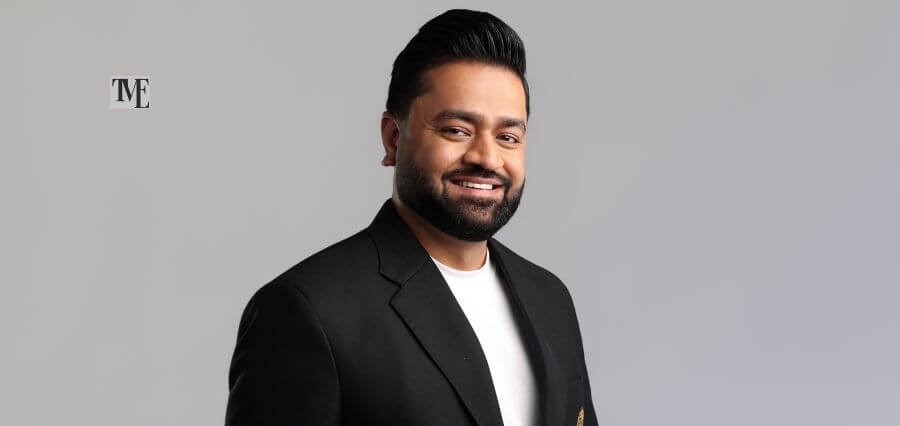
Behind every lasting leader, there is a journey defined by resilience, learning, and purpose. Kamran Shaikh’s leadership story has been shaped in moments of struggle and setbacks For people like us giving up would have been the easier choice, but he did not; rather, he learned and flourished out of it. He measures success not by authority but by trust and growth.
Looking at his journey, we see that his leadership has been formed through experience more than titles. Grounded by lessons drawn from uncertainty, his approach reflects integrity, discipline, and a people-first mindset. Further, his career evolved from real estate into leading multiple organizations, based on his learning, resilience and consistent actions. Today, with diligent effort and guiding principles of honesty and dedication, he serves as a CEO, Partner of Esskay Properties and then later on, Kamran Shaikh as Partner and Managing Director of 3X Capital.
Forged by Experience
Kamran’s leadership journey was not shaped in boardrooms, but in uncertainty, setbacks. This eventually refined his judgment. He affirms that leadership is earned through consistency, integrity and courage to stay the course when times are hard.
During the initial phase of his career in 2011, working with plots in real estate. He learned from day one as an employee that leading was not about control, but rather about being resilient and responding to challenges. For instance, after an early failure in a business transaction, he discovered that maintaining a steady commitment to a specific goal produces very favorable results through consistency.
As he began working on his own business projects, he focused more on thinking of long-term responsibilities instead of the one-time revenues resulting from business transactions. Through months of diligent hard work and the guiding principles of honesty and dedication, he established his own successful venture.
Vision In Practice.
“My long-term vision has always been rooted in building trust-led, quality-driven organizations that outlast market cycles,” he says.
This mindset suggests to us that whichever organization he builds has trust and a focus on quality, which can outlast changes in the marketplace. To accomplish this goal, he sets his vision in everything he does daily, including aligning priorities of work on the team and the evaluations and standards of those teams.
He does not pursue opportunities that will diminish the long-term credibility of the organization for short-term profit. He believes that by offering a purpose for what people do rather than an oversight of their actions, he can allow for consistent decision-making at all levels of the organization.
He empowers his team every day, giving them the ability to question. Is this creating value? Is this protecting the client’s trust? When the vision of the organisation is made tangible, the team doesn’t need to be managed closely. The vision is sustained by consistent, disciplined choices, not by theatrics but by making the disciplined choices many times even when no one is looking.
Leading balance with clear intention.
Kamran approaches leading teams with balance and transparency. He believes that performance and empathy are interconnected.
At his firm, expectations are clearly set based on clear definitions, feedback is given in straightforward ways, and accountability applies across all teams. When there is a setback, the focus will still be on learning and moving forward instead of pointing out issues created by the setback.
He brings forth his own life lessons for leading people as a true leader, regardless of their role. When standards are balanced with empathy, he creates an atmosphere where trust remains, accountability and open dialogues are non-negotiable. He feels that establishing this balance does not happen by chance but through consistent daily practices.
Discipline of change
We know change is inevitable, Kamran believes and deals with it by being present and listening more than speaking, clarifying more than directing, maintaining active engagement and visibility throughout this period, breaking complex issues into smaller and manageable pieces, assisting teams in staying focused on the most urgent task, which ultimately enables them to succeed.
Communication plays a critical role in ensuring high morale by acknowledging the difficulties and reinforcing their beliefs through a common goal. When employees know the reasons why there has been a change and how it will affect their future, they are better aligned and are less hesitant to take ownership of the change.
Trust at the core.
As stated by Kamran, empowerment is built upon trust, not authority, which is defined by the leaders of the organisation. This increases the sense of ownership when there is a level of responsibility associated with capability, which is supported by providing clear direction and structure.
The senior leaders have freedom to make decisions, are accountable for their own actions, and have freedom to apply their independent judgments. On the other hand, emerging leaders are developed through being exposed to opportunities to lead and have opportunities for managing responsibilities, and experiential learning.
He amplifies a point that making mistakes is part of the process and development, not a reason for failure. Together with recognition of results, it creates confident leaders who are connected to their organisation, have a sense of accountability to their organisation, and have an interest in the long-term goals of their organization.
Measured choices.
Kamran, as a person, chooses calm over chaos. Pressure, in his view, is never a reason to dilute principles, but it’s rather when values must hold firm. His approach is structured and guided by careful risk assessment, data, and diverse perspectives.
His financial background enables him to assess sustainability based on more than just short-term profitability, while his experience-based instincts support deepening his judgment. He has good attention to detail, and so he believes high-quality products and trust are the two most important aspects of a successful business opportunity. His analysis of all major decisions includes their long-term value, and those decisions will not advance unless they are viable in the future.
One of these principles he stands by is asking the question, “Will I still stand by this choice five years from now? If the answer is uncertain, the decision waits,” he says.
Culture through actions
Kamran believes in creating a culture, built and shaped by behaviour, not just slogans. According to him, frequent actions of an organisation create its culture by evoking appropriate behaviour such as respect, integrity, fairness and encouraging shared responsibility, as it will define how culture develops.
He states that new ways of thinking will emerge when new concepts and thoughtful risk-taking are encouraged, and learning is prioritized over repetitive behaviour. Ethics adds an unyielding value by establishing the same criteria for every role. So that trust, accountability, and sustainability will develop.
Integrity in Influence
“At the core of every interaction is a simple belief: we are all human, capable of learning from one another,” he believes.
Kamran’s approach while dealing with teams or the stakeholders is quite indulged in following core principles of transparency, strategy, respect and integrity.
With teams, they work together collaboratively and in supportive ways. They are also strategic in the way they work with each other, as it’s an open and honest relationship.
When working with boards, they have a structured, data driven and forward-thinking approach. He thinks the basis for all influence is credibility. If people trust your intentions and your abilities, it would be natural for them to try to get onto the same page as you. Furthermore, integrity helps ensure that being adaptable does not translate to being inconsistent.
Learning today
Kamran says he is “a student of business.” he would continue to learn as people change, markets change, and so leadership must also evolve with them.
For him, learning is never-ending. He spends time on learning, whether it be through reading or having discussions with mentors. One thing that helps keep him grounded is the habit of being disciplined. He finds that discipline provides a solid foundation of structure. Paying attention to detail helps him make better business decisions and keeps him away from having to change the things within the organisation that do not meet any standards.
As a parent, he describes that true success can never be measured, but the essence of it can be felt in how much time we spend with others and what we value.
Leaving a legacy through impact.
Kamran believes in legacy defined by the trust built with clients, teams, and partners. Throughout his career, he hopes the organizations he has helped build will be known for their high ethical standards, superior quality, and sustainable success. He wants future leaders to lead with humility, perseverance, and clarity of vision.
In his opinion, new leaders must recognize that success cannot come solely from one person and that giving back to their communities is just as important as their accomplishments. He believes that if he helped other people to be more consistent during tough times, to respect others, and to be confident in making decisions, then he succeeded. Leadership should be evaluated based on its impact rather than the leader’s title.
“If future leaders can say they learned consistency in adversity, respect for people, and courage in decision making from my leadership, then I will consider that a meaningful legacy,” he affirms.
His journey depicts a leadership style built on trust and profound decision-making, focusing on long-term vision. He balances discipline with empathy, strategic decisions with ethics, and authority with humility.