
Before a surgeon uses a scalpel or before a doctor writes a prescription or makes a treatment plan, there is one person who has already made the most important call. From the laboratory, they see what no-one else can see, and say: “This is what is going on in this person’s body.” If they get it right, then the medicine will work. If they get the call wrong, everything that comes after will then be based on something that nobody knows for sure.
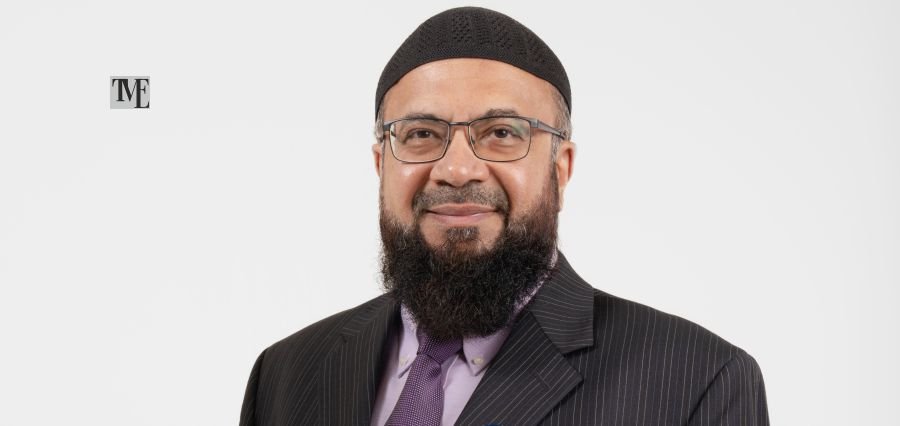
Dr. Ibrahim Mansoor has spent his career making sure that that call is always right. As Chairman of the Department of Laboratory Medicine at King’s College Hospital London (KCH) in Jeddah, holding fellowships from both the College of American Pathologists and the International Academy of Cytology, he leads one of the most demanding departments in modern medicine with a single, non-negotiable standard: certainty.
What makes him stand apart is not just his credentials. It is the way he thinks. He has trained internationally and worked deeply inside Saudi Arabia, which means he carries a rare double perspective: the discipline of global best practice and the sharp awareness of what Saudi patients actually need. He brings both into the laboratory every single day, and the results speak for themselves.
A Career Shaped by Two Worlds
Dr. Ibrahim Mansoor holds distinguished professional recognitions that reflect his standing in the field: Fellow of the College of American Pathologists (FCAP) and Fellow of the International Academy of Cytology (FIAC). These honors are not simply titles—they are earned through years of professional development, peer recognition, and demonstrated clinical expertise. His training has also included experience at world-renowned institutions such as Yale University and the Mayo Clinic, shaping a global perspective on pathology practice.
But what truly defines the way he leads is something that no credential alone can capture: the experience of having trained internationally while practising extensively within Saudi Arabia’s rapidly evolving healthcare system.
Bringing a 175-Year Legacy to Jeddah
KCH has been part of London’s medical fabric for 175 years. That kind of legacy does not travel lightly. When Dr. Ibrahim Mansoor joined the institution, the challenge in front of him was real and demanding: how do you carry a 175-year-old clinical tradition into a new country, a different culture, and a distinct set of patient expectations without diluting what makes it extraordinary?
His answer was deliberate. He was not there to replicate London in Jeddah. He was there to translate it. Under his leadership, the laboratory runs on a hybrid model that takes KCH methodology and shapes it to fit the pace, the language, and the clinical realities of Saudi healthcare. Turnaround times are calibrated to match local workflows. Saudi nationals are trained to become the guardians of the KCH standard. Referring physicians trust the laboratory because the results speak their clinical language.
For Dr. Ibrahim Mansoor, the real work of this transplantation is intellectual, not logistical. He is not shipping a system across borders. He is embedding a mindset- one that takes root in Saudi soil and produces results that meet the highest international standard. Every decision he makes inside that laboratory runs through a single filter: does this serve the Saudi patient with KCH’s precision?
The Culture of Getting It Right
Dr. Ibrahim Mansoor is precise about what his laboratory produces. He does not just call it a service. He calls it certainty. In pathology, a missed diagnosis is not a scheduling problem. It can mean a patient starts the wrong treatment, or never starts the right one. The consequences are permanent. Dr. Ibrahim Mansoor has built his entire leadership model around that fact.
His framework for accuracy sits on three foundations: strong systems, an honest culture, and real accountability. On the systems side, no critical diagnosis leaves the laboratory without at least two expert reviews. On the culture side, he has created what he calls a “No Ego Microscope” environment. It’s a space where every member of the team, regardless of seniority, is both expected and empowered to raise a concern. The person who catches the discrepancy is celebrated. Silence out of deference has no place here.
On accountability, every error, including near-misses that never reach a patient, triggers a full root cause analysis, and the findings feed directly back into training. Nothing is quietly set aside. Dr. Ibrahim Mansoor has also introduced digital pathology tools and AI-assisted screening into the workflow, but with a firm boundary in place: technology flags what it finds, and the pathologist makes every final call. That line does not move.
Working With Regulation, Not Around It
Most laboratories choose a lane- local compliance or international standards. Dr. Ibrahim Mansoor operates in both simultaneously. His approach is what he calls proactive harmonisation: instead of waiting for an audit to surface a gap, his team builds every standard operating procedure to satisfy both CBAHI requirements and international benchmarks like CAP and AABB accreditation at the same time.
His department maintains an internal compliance matrix that maps every CBAHI standard directly against its international equivalent. No one operates in isolation, and no standard is treated as optional. When a genuine gap exists between local regulation and global best practice, Dr. Ibrahim Mansoor does not quietly work around it. He engages directly with regulatory bodies and makes the case for evidence-based alignment. His goal is not a laboratory that passes its next inspection. It is a laboratory that a clinician in London and a clinician in Jeddah would both walk into with full confidence.
Diagnostics That Move Toward the Patient
Dr. Ibrahim Mansoor is not building a laboratory that waits. He is building one that reaches. Inside KCH Jeddah, he has developed a comprehensive point-of-care testing infrastructure that places diagnostic capability directly at the patient’s bedside. This is not a handful of rapid tests on a trolley. It is a fully integrated, bed-by-bed model that gives clinicians KCH-grade results in real time, at the exact moment decisions are being made.
The wider vision extends well beyond a single hospital. KCH’s expansion strategy calls for multiple facilities across Saudi Arabia, each with laboratory services built into the core from day one. Dr. Ibrahim Mansoor sees this as the only way to do it honestly. Diagnostic quality cannot be added later as an afterthought. It has to be part of the foundation. Every new KCH facility carries that standard into communities that need it. The approach sits directly within the framework of Saudi Vision 2030 and its commitment to extending quality healthcare access across the Kingdom.
Predicting What Comes Next
Saudi Arabia’s Saudi Genome Program is one of the most forward-looking national health initiatives in the world. It is changing what laboratory medicine can realistically achieve, and Dr. Ibrahim Mansoor intends for KCH Jeddah to be at the front of that change. He is steering his department away from purely reactive diagnostics and toward predictive and personalized pathology: not just identifying what a patient has today, but mapping what they are at risk of tomorrow.
Getting there requires serious commitment. Dr. Ibrahim Mansoor is investing in molecular pathology capabilities, building bioinformatics infrastructure, and developing a new generation of pathologists who can read genomic data as confidently as they read tissue under a microscope. He is also attentive to what makes the Saudi patient population distinct. Specific genetic patterns linked to consanguinity-related conditions make personalised pathology not just beneficial here but clinically essential. Dr. Ibrahim Mansoor is forming partnerships with genomics leaders to bring pharmacogenomic testing into everyday clinical workflows, so that every patient’s treatment plan is matched to their own biology from the very start of their care.
The Steady Hand in the Storm
Healthcare leadership does not come with calm days guaranteed. There are periods of routine and rhythm, and then there are the moments when a critical result is delayed, a system fails at peak volume, or a team member makes a mistake under pressure. In those moments, Dr. Ibrahim Mansoor says, the single most important variable in the department is how the leader responds.
He does not ask his team to act as though pressure does not exist. He asks them to stay steady inside it. He practises what he calls controlled urgency- moving with purpose and speed, but without transmitting panic. When something goes wrong, the team does not retreat into blame behind closed doors. They name the problem, own it, and fix it together. Dr. Ibrahim Mansoor calls this radical transparency, and he has seen it build more genuine trust than any policy document ever could.
He also gives a clear warning to emerging leaders: a department that only holds together because one person is carrying it will not survive long. Build systems strong enough that problems are caught by protocol and not rescued by personality. Reserve your energy for the moments that truly need it. That is what durable leadership looks like in a clinical environment.
Building the Future of Saudi Laboratory Medicine
Dr. Ibrahim Mansoor does not treat Saudization as a compliance target. He treats it as one of the most meaningful things he will do in his career. The KCH Academy is the centrepiece of his long-term vision. Planned to launch following the completion of the hospital’s establishment phase, it is designed to take Saudi graduates and shape them into KCH-calibre laboratory professionals.
The programme is built around genuine mentorship. Junior Saudi scientists will work directly alongside senior consultants on complex, real cases. They will attend international conferences. They will follow a clear career pathway that rewards ability and drive. Dr. Ibrahim Mansoor also champions what he calls reverse mentorship: the recognition that Saudi team members carry knowledge that no international training programme can provide. It is all about deep familiarity with local clinical patterns, cultural context, and community health needs. That knowledge, he believes, makes the entire department stronger.
Dr. Ibrahim’s target for 2030 is straightforward to say and serious to deliver: the KCH laboratory’s leadership should be predominantly Saudi. He plans to nurture professionals who have fully absorbed the KCH standard and who carry it forward with their own insight and commitment. He is not in the business of training staff who fill roles. He is building the people who will one day run this laboratory entirely on their own terms. That is the legacy he is working toward- quietly, consistently, and without compromise.