

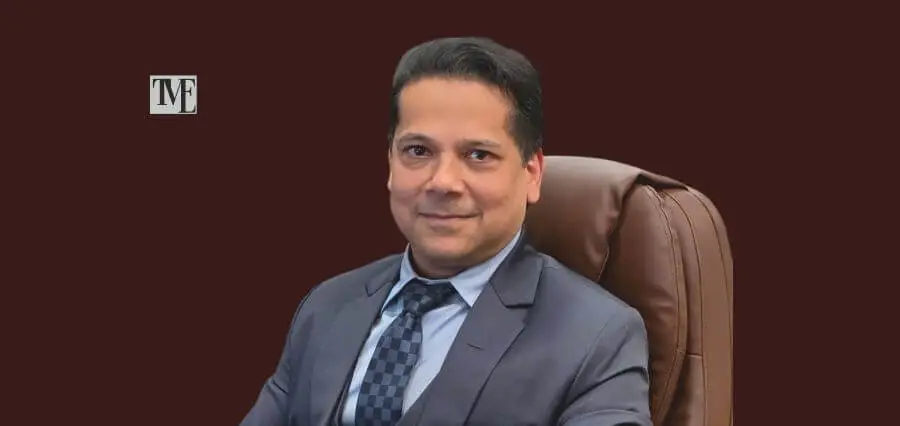
Advancing Medicine with Purpose and Compassion
Medicine often begins with a question, and no matter how experienced a physician becomes, the search for answers never stops. Behind every diagnosis lies a story, and every procedure offers an opportunity to understand that story more deeply. This quest for knowledge and answers has always been central to Dr. Shamsheer Kote’s approach to medicine. He steps into the endoscopy room with the confidence of a physician who knows that every patient provides a chance to learn something new. His work combines medical knowledge, modern equipment, procedures, and a profound understanding of patients. Currently, he serves as a Consultant Gastroenterologist at Medcare Hospitals & Medical Centres. His medical education began at Kasturba Medical College in India, followed by 16 years with the National Health Service (NHS) in the United Kingdom.
During this time, he spent six years as Consultant Gastroenterologist and Physician at Queen Elizabeth II Hospital and Lister Hospital, part of the East and North Hertfordshire NHS Trust, which operates 800 beds. He holds fellowships and membership status with some of the most prestigious professional bodies in the field, such as the Royal College of Physicians of London, the British Society of Gastroenterology, the Royal Society of Medicine, and the European Association for the Study of the Liver. He is also a consultant with the National Association for Crohn’s and Colitis based in the United Kingdom.
Lessons in Purposeful Leadership
When asked what has shaped Dr. Shamsheer most throughout his career, he does not point to a single mentor or landmark case. Instead, he reflects on the diverse range of patients he has cared for over the years. One day, he may guide a patient through a simple diagnosis. The next, he may manage a complex case involving inflammatory bowel disease, liver failure, or transplantation. These experiences have taught him that good medicine is not always about having the right answer. It is about knowing when to listen, when to act, and when to recognize that a case goes beyond the textbook. Today, that also means understanding the limitations of information from “Dr. Google” and AI chatbots.
He credits multidisciplinary teamwork as a key part of his growth as a leader. He believes the best outcomes rarely come from a single clinician working alone. They emerge when specialists bring different areas of expertise and work toward a shared goal*: the patient’s well-being*. For him, medicine is a team effort, with the patient always at the center.
“I see medicine as a team effort where different perspectives come together for one purpose: better patient care,” he says. This belief also shapes his perspective on how artificial intelligence will transform medicine. He expects AI to support rather than replace specialties such as Gastroenterology, Cardiology, and Surgery, where clinical judgment and procedural skills remain essential. He sees fields such as dermatology and radiology as more exposed to disruption because much of their work relies on pattern recognition, an area in which AI is rapidly advancing.
Leading with Integrity
A Leader in Inflammatory Bowel Disease and Gastroenterology
Dr. Kote Shamsheer is a distinguished gastroenterologist with a strong clinical and academic focus on Inflammatory Bowel Disease (IBD), including Crohn’s disease and ulcerative colitis. He is one of the leading carers for patients with IBD. Over the course of his career, he has developed a reputation for combining clinical expertise, evidence-based medicine and a deeply patient-centred approach to the management of complex gastrointestinal disorders.
At the heart of his professional journey is a commitment to advancing the quality of IBD care. He has closely followed the remarkable transformation of the field—from conventional approaches focused primarily on symptom control to modern strategies centred on deep remission, mucosal healing, prevention of complications, treat-to-target strategies and personalised therapy.
Dr. Shamsheer’s expertise encompasses the evolving landscape of IBD treatment, including biologic therapies, targeted small molecules and newer selective immune therapies. He recognises that the growing number of therapeutic options represents both an exciting opportunity and a clinical challenge: choosing the right treatment for the right patient at the right time.
His philosophy is therefore not simply to ask, “Which drug should we use?” but rather, “Which treatment is right for this particular patient?”
Disease severity, phenotype, previous treatment exposure, extra-intestinal manifestations, comorbidities, safety considerations, patient preferences and long-term goals all form part of his approach to personalised IBD management.
For Dr. Shamsheer, IBD leadership also means looking beyond the prescription pad. Chronic inflammatory bowel disease can affect virtually every aspect of a patient’s life—from nutrition and work to relationships, mental wellbeing and future planning. He therefore places considerable emphasis on shared decision-making, patient education and long-term partnership with patients.
Beyond IBD: A Broader Gastroenterology Vision
While IBD remains a major area of his expertise, Dr. Shamsheer’s interests extend across the wider spectrum of Gastroenterology, including gastrointestinal disorders, hepatology, colorectal health and endoscopy.
leadership style moves away from the command-and-control approach often seen in hospital hierarchies. He leads by example rather than by position. He aims to create an environment where colleagues can speak openly, challenge ideas respectfully, and feel that their contributions matter. Integrity, compassion, accountability, teamwork, and continuous learning guide his approach to leadership. “I lead by creating an environment where every voice has the confidence to be heard,” he says.
He does not claim to have all the answers. Instead, he builds teams where everyone is encouraged to contribute their best ideas. He also remains humble enough to recognize that a junior doctor may sometimes notice something that a senior consultant has missed. For him, humility is not a weakness in leadership. It is an essential quality that helps teams work better together.
He wants everyone working alongside him to feel connected to a meaningful purpose. His goal is for people to see their roles as more than simply completing a shift. He encourages them to recognize the value of their contribution to patient care and to the wider mission of the team.
Trust at the Heart of Leadership
For Dr. Shamsheer, trust is built on consistency and honesty. Colleagues and patients need to know that he listens, offers support during challenging times, and gives fair recognition to their contributions. He promotes collaboration by keeping communication open across disciplines. He recognizes that modern Gastroenterology is no longer a solo pursuit. Effective patient care often involves Gastroenterologists, Surgeons, Radiologists, Pathologists, Nurses, Dietitians, and Pharmacists, with the patient at the center of every discussion.
He keeps every discussion focused on one essential question: What is best for the patient? He encourages teams to move beyond departmental preferences, outdated practices, and personal opinions. When the patient remains at the center of the conversation, disagreements can become opportunities to consider different perspectives and make better decisions. This approach strengthens teamwork and helps ensure that every decision is guided by the patient’s needs.
Thoughtful Decision-Making
Complex Gastrointestinal and liver conditions rarely have simple answers. Dr. Shamsheer follows a careful approach when navigating such cases. He considers the available clinical evidence, the patient’s individual needs and preferences, and the risks and benefits of each option. He also draws on the collective expertise of the multidisciplinary team before deciding on the best course of action. “I believe true clinical confidence comes from competence, curiosity, and knowing when to seek help,” he says.
He avoids making decisions more complicated than necessary. He believes that the safest and simplest option is often the best one. When colleagues have different views about a case, he does not assume that someone is wrong. Instead, he recognizes that the patient’s condition may be genuinely complex. He evaluates every final decision against three principles: it must be evidence-based, patient-centered, and ethically sound. Personal ego should never influence the outcome.
Communication with Compassion
For Dr. Shamsheer, technical excellence means little without clear communication. Even a well-executed treatment plan can fall short if a patient leaves without understanding it. He takes time to understand what matters to each patient beyond the diagnosis. This includes their fears, expectations, family circumstances, lifestyle, and personal priorities. He also makes a conscious effort to explain complex medical information in simple and accessible language. If an explanation requires a medical dictionary, he believes the doctor has not communicated effectively.
He measures a successful consultation by whether the patient can answer three basic questions: What do I have? What are my options? What happens next? For him, empathy is an essential part of clinical care. Patients may forget medical terminology, but they rarely forget how a doctor made them feel. “I want to advance medicine without losing sight of the compassion that makes care truly human,” he says.
Innovation with Purpose
Dr. Shamsheer approaches new technology with both enthusiasm and healthy skepticism. He does not assume that novelty, high cost, technical sophistication, or a polished presentation will automatically lead to better care. He evaluates each innovation based on the strength of its evidence, safety, reliability, patient benefits, cost-effectiveness, and practicality in real clinical settings. “I embrace technology when it adds meaningful value to patient care, not simply because it is new,” he says.
He expects artificial intelligence, advanced endoscopy, precision medicine, digital health tools, and new therapies to shape the future of gastroenterology. However, he applies one consistent question to every new development: Does it genuinely improve healthcare for the patient? If the answer is yes, he is willing to embrace it. If an innovation offers more appearance than meaningful value, he prefers to wait until the technology becomes more mature and effective.
Empowering Through Mentorship
Teaching is central to much of what Dr. Shamsheer does. This role has become even more significant with his appointment as Associate Professor of Medicine at Dubai Medical College, where he is actively involved in teaching and training medical students and junior doctors. He considers mentoring one of the most important responsibilities of a senior clinician. His approach focuses on giving younger doctors meaningful responsibility while providing consistent support. He believes trainees should have the opportunity to make decisions independently. At the same time, they should know that an experienced colleague is available when situations become challenging.
He has the prestigious post of a DIO (Designated Institutional Officer). As a DIO, he is responsible for ensuring the effective governance, smooth functioning, quality and continuous improvement of our medical education and training programs. His role is instrumental in supporting the delivery of a structured education and training to students, interns, residents and fellows pursuing their respective programs with Medcare.
He provides overall leadership and oversight for the institution’s medical education and training programs and ensure compliance With NIHS and applicable regulatory requirements.
He encourages trainees to ask questions, challenge established thinking, engage with evidence, and openly acknowledge when they do not know something. He believes clinical confidence should come from genuine competence rather than the appearance of certainty. He reminds trainees that patients do not need a doctor who claims to know every answer. They need a doctor who knows how to find the right answer, when to seek help, and when to put aside personal ego in the patient’s best interests. “I want the next generation of doctors to remain curious, question what they know, and never stop learning,” he says.
His message to the next generation is simple: never stop learning. Medicine constantly evolves and reminds even experienced clinicians that there is always more to understand.
An Educator at Heart
Alongside his clinical work, Dr. Shamsheer considers education an essential part of his practice as a doctor. He believes medicine is not only about diagnosing disease and prescribing treatment. It is also about helping patients understand what is happening inside their bodies, why it is happening, and what they can do to protect their health. Over his years as a gastroenterologist, he has come to believe that an informed patient is an empowered patient. A consultation should not simply end with a prescription. It should leave the patient with a clearer understanding of their health and the confidence to participate in decisions about their care.
He works to translate complex medical terminology, including conditions such as fatty liver, inflammatory bowel disease, reflux, irritable bowel syndrome, and liver fibrosis, into language that patients can understand. He often reminds them that no question about their health is too small to ask. At times, a simple analogy or drawing can make a complicated condition much easier to understand. He also believes that patient education should begin long before an illness becomes serious. Many gastrointestinal and liver conditions are influenced by lifestyle factors such as diet, physical activity, obesity, alcohol consumption, smoking, and sleep. Helping patients recognize these risks early can make a meaningful difference before a disease progresses. Fatty liver disease, for example, may cause few or no symptoms until it has advanced.
He also recognizes that patients today have unprecedented access to information online, which can be as overwhelming as it is useful. Rather than discouraging patients from searching for information, he prefers to teach them how to search responsibly by identifying reliable sources and discussing what they find with their doctor. For Dr. Shamsheer, this reflects a broader shift in healthcare toward a model where doctors and patients work together as partners in care, rather than one where doctors simply issue instructions.
Impact Beyond Achievement
When Dr. Shamsheer reflects on the most significant achievements of his career, he looks beyond awards, publications, and professional titles. He focuses instead on the patients whose lives improved because of a decision he made. He also values the complex diagnoses his teams successfully managed, the patients who regained confidence after serious illness, and the families who placed their trust in him during some of their most difficult moments.
He takes particular pride in the doctors he has trained and mentored. Watching a former trainee develop into an accomplished physician gives him a sense of fulfillment that no line on a CV can capture. With a touch of humor, he says that after many years in the specialty, he has developed one reliable skill. A quick look at his endoscopy schedule tells him whether his morning coffee has any chance of surviving.
Behind the humor is a deeper measure of professional success. He evaluates his career less by what he has accumulated and more by what he has contributed to his patients, colleagues, and the next generation of doctors.
Advancing Accessible Care
Looking beyond his own practice, Dr. Shamsheer sees the future of gastrointestinal care as one that is earlier, smarter, more coordinated, and more accessible. He calls for stronger prevention and screening programs, earlier detection of gastrointestinal and liver diseases, and better access to specialist care. He also emphasizes the importance of well-designed multidisciplinary care pathways, responsible use of new technology, and greater public awareness of digestive health.
He believes medical leaders have a responsibility to turn good ideas into sustainable systems. This requires balanced investment in people, technology, education, quality improvement, and data-driven care. For him, progress in healthcare depends not only on medical advances but also on building systems that make high-quality care available to those who need it.
A Legacy Beyond Medicine
Dr. Shamsheer describes Gastroenterology as entering an extraordinary era. The field is being shaped by precision medicine, artificial intelligence, advanced endoscopy, improved biomarkers, personalized therapies, earlier cancer detection, and more sophisticated approaches to liver and gastrointestinal diseases. Yet he hopes the specialty will retain its human side amid this rapid technological progress. His vision combines scientific and technological advances with compassion and sound clinical judgment.
When reflecting on his legacy, he looks beyond procedure numbers, publication lists, and professional titles. He would rather be remembered as someone who made a meaningful difference in the lives of patients, helped colleagues become better doctors, and supported the next generation of physicians. He also hopes to have contributed to a culture built on excellence, compassion, and kindness.
If he has inspired even a few young doctors to see gastroenterology as one of medicine’s most rewarding specialties, he would consider that a legacy worth leaving. As Dr. Shamsheer puts it, the most meaningful legacy a doctor can leave is not written on paper. It lives in people.