

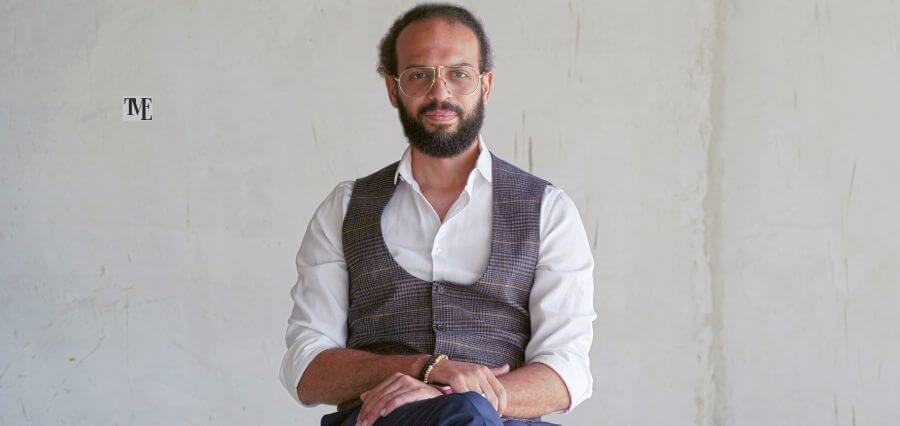
Instead of blueprints, architecture starts with a whisper, an unseen pull that finds expression in light, space, and human experience. At four years old, Moemen AbdElkader heard the whisper that would eventually shape the skylines of the Middle East. He serves as the Associate Director of P&T Group, a prestigious organization whose 157-year history has endured through fifteen decades of regional change. Moemen does more than just create architectural designs. He creates symphonies out of glass and concrete, where each corridor tells a tale of inclusive human potential, light becomes melody, and ventilation becomes rhythm.
In an era where the Middle East rewrites its architectural grammar with each ambitious landmark, Moemen emerges as both interpreter and innovator. His projects aren’t replicated; they’re born- each one a distinct fingerprint pressed into the region’s evolving identity. He is an architect who understands that walls don’t contain space; they release it. That design isn’t about imposing vision; it’s about cultivating fertile ground where innovation flourishes. In his hands, architecture transcends its physical dimensions to become a living dialogue between possibility and place, between heritage and horizon.
In an interesting interview with The Middle East Leaders, Moemen discussed his career path, obstacles, successes, and future goals. The following are the highlights of the interview:
You have been with P&T Group for over a decade, growing steadily through different roles. Looking back, what inspired you to pursue architecture, and what continues to fuel your passion today?
It has been a long journey, and when I take a moment to look back at my career, I realize that learning never truly stops – it continues to shape every step of the journey ahead.
P&T has been an incredible workplace that continuously supports and empowers its team, guiding me to grow both professionally and personally, and helping me bring out the best version of myself.
Yet, my passion for architecture began long before joining P&T – perhaps as early as the age of four. Something within me was always quietly pulling me toward this path, and looking back now, I can only feel grateful for where it has led me to be by the end.
What was the turning point in your career that shaped your vision as an architect and designer?
I have passed through many turning points, each of which has contributed to shaping my vision and professional identity. Among them, EXPO 2020 Dubai stands out as a truly remarkable experience – both as an architect and as a visitor. It offered a rare opportunity to witness how architectural tools can be used to shape and enrich the user journey from the very first step through the gate.
Many people tend to think that architecture is limited to walls, doors, and the physical form of buildings. Nevertheless, architecture goes far beyond that. It encompasses the subtle orchestration of light, sound, ventilation, and even scent – all of which, when used intelligently, can transform space into a new dimension of materiality and experience.
Having recently taken on the role of Associate Director, how do you see your leadership shaping the next phase of design innovation at P&T Group?
I believe design innovation is not limited to leadership. From my experience, innovation can come from any team member, when that leadership creates an environment where everyone feels empowered to step outside their invisible box and explore new ideas.
If I can help extend this freedom to innovate across the team, it becomes a winning game for everyone involved – fostering creativity, ownership, and collective growth.
Fortunately, P&T has always been a fertile ground where any seed of an idea, when planted with passion, can grow quickly and flourish.
How do you balance creativity and functionality while leading large-scale projects across the Middle East and Africa?
It differs from one project to another. Functional doesn’t necessarily mean that we should be less creative. In fact, I believe that creativity lies at the core of architecture.
A good architect should be able to adapt creativity according to various parameters – such as the building’s context, client requirements, code compliance, available resources, and technical constraints. When these factors are thoughtfully integrated, creativity becomes the means to achieve a truly functional design.
In other words, creativity is embedded in the process itself. it’s how functionality is ultimately realized.
Your tenure emphasizes diversity and collaboration with teams. How do these elements influence your design philosophy and approach to projects?
Being in Dubai offers a remarkable opportunity to engage with diverse cultures and perspectives from all around the world. This rich and dynamic environment continuously nurtures and broadens my approach to every project.
In my view, such diversity enhances cognitive flexibility, encouraging a more open-minded and adaptive design process rather than one constrained by prototypes or repetition. As a result, each project attains its own distinct identity – much like a fingerprint or a piece of art, unique and impossible to replicate.
What are the key design principles or values you never compromise on, regardless of the project scale or location?
Our buildings are ultimately made for people. I once had a professor in architecture school who used to say, “Being an architect is more critical than being a doctor – a doctor’s mistake may affect one patient, but an architect’s mistake can affect millions of users for decades.”
While we fully understand that a client’s primary objective is to achieve profitability – which is a perfectly reasonable goal – it should never come at the expense of inclusive design. Architecture must remain adaptable, accessible, and habitable for all who interact with the built environment.
For that reason, I believe that inclusivity in design is not merely a consideration – it is a principle that must never be compromised.
The Middle East is becoming a global hub for architecture and design. In your view, what makes the region’s architectural identity stand out on the world stage?
The Middle East has always been a dynamic hub on many levels. Yet, what continues to evolve is its focal point-a reflection of the region’s diversity and its ability to challenge and redefine traditional imagery.
Over the past few decades, Dubai, Qatar, Egypt, and more recently Saudi Arabia, have witnessed extraordinary growth, driven by a progressive and inclusive vision that welcomes global collaboration. In today’s interconnected world, boundaries have dissolved-everything feels just a fingertip away.
Within this transformation, architectural identity has emerged as one of the most powerful forces shaping the region’s evolution. I can proudly say that most of our clients today-aligned with their governments’ strategic visions-aspire to create landmarks that leave a mark on the world map.
At P&T, it is always inspiring to work with such visionary clients, whose ambition continuously elevates our architectural identity and helps it stand out across the region.
How do you see Middle Eastern architecture evolving in the next five years, and how is P&T contributing to that transformation?
It’s difficult to predict where architecture will head next year, but one thing is certain – AI is rapidly reshaping our perception of the future of design.
It has already become a transformative tool across industries, including architecture, although it still feels like a quiet yet unpredictable player, one whose next move is hard to foresee.
At P&T, we already use several AI-driven tools on a daily basis that save substantial time for both our team and our clients. I’m not only referring to creative generators like Midjourney or PromeAI, which can produce stunning renders within minutes, but also to intelligent assistants such as Kimi and Tenorshare, which can summarize extensive PDF documents, or Fathom and Read.ai, which automatically record and distill meeting discussions in seconds.
By delegating repetitive tasks to these tools, I find that I can redirect my time and focus toward more meaningful and creative aspects of the project – ultimately contributing greater value to the design process.
How do you integrate sustainable and human-centric design into modern architectural practices?
The definition of modern architectural practice is indeed complex. I believe that the more architecture evolves and modernizes, the more it should become sustainable and human-centric by nature.
Today, with the depth of research available and the advancement of design tools, we have unprecedented access to what can truly be called modern architecture – an architecture that is responsive, data-informed, and deeply connected to human experience.
At P&T, our dedicated Sustainability Department is involved from the very inception of each project, ensuring that environmental and human considerations are embedded in the design process from day one. Through collaborative efforts across disciplines, we are able to guide our clients toward the most efficient and responsible design solutions, where sustainability and human-centric design are seamlessly integrated into a modern architectural expression that aligns with each project’s vision and purpose.
You also have experience as a teaching assistant earlier in your career. How has mentoring shaped your professional journey, and do you continue to guide young architects today?
Being a teaching assistant was one of the most rewarding moments in my life. It’s a wonderful feeling to pay it forward and contribute to the knowledge and growth of young architects. I’ve always loved the idea behind the Hollywood movie “Pay It Forward”, which illustrates how small acts of giving can ripple through society and reshape communities.
I genuinely believe that teaching is the foundation of all professions – no career could exist without the act of teaching. That’s why I deeply enjoy sharing what I’ve learned, as well as what I continue to learn throughout my journey.
The RIBA regularly organizes events where fresh graduates have the opportunity to be mentored by professional architects, guiding them through their first steps into the profession.
I also had the privilege of delivering a lecture at my alma mater a couple of years ago, titled “A Glimpse Towards Your Professional Career”, aimed at helping pre-graduate students prepare for their transition from academia to professional practice.
Furthermore, within P&T Group, we maintain joint ventures with several universities across the UAE, believing firmly in actively shaping the future of architecture by engaging with and mentoring the next generation of designers.
This commitment was recently demonstrated through a meaningful academic-industry collaboration with Ajman University’s Architecture Department, led by our dedicated P&T team.
What advice would you give to aspiring architects who want to make an impact in the Middle East’s design landscape?
I would advise them to be patient and to never stop developing their talents. Growth in architecture comes from continuously enhancing one’s skills and absorbing the full spectrum of integrated architectural tools that shape our profession today.
Equally important is the mastery of language and communication skills. These skills require consistent practice – in both speaking and listening – as they form the foundation of effective leadership. With time, dedication, and openness to learning, these qualities will naturally guide them toward becoming great leaders in the field.
As you look toward the future, what is your personal vision for architecture in 2025 and beyond?
My vision is to see more landmarks that my team and I have contributed to – projects that stand as gifts to more inclusive communities, enhancing both indoor and outdoor living standards. I aspire to continue promoting sustainable design principles that not only shape the built environment but also create greater value for living and a better quality of life for everyone.
What legacy do you hope to create through your work at P&T Group and as an architect in the region?
Being part of the P&T Group is truly being part of a legacy. It is almost unbelievable to lead within an architectural firm that was founded in 1868 – a firm whose history spans more than fifteen decades of shaping skylines across the Middle East and Asia.
It is an honor to be named alongside the architects and engineers who have defined the built environment of our region for generations. With every project we undertake, we carry forward P&T’s heritage and experience, a foundation of excellence and innovation that is unmatched by any other firm.