

In the Middle East, historic cities coexist with futuristic aspirations, creating a mingling pot of the traditional and the new. Architects and planners spend their days and nights exploring this uncharted area to design places that honour tradition while embracing advancement. These kinds of conundrums must be resolved by practitioners to balance rapid growth, massive national initiatives, and the requirement to create public areas that are memorable to a variety of consumers.
They are creators of the new world who recognise the emotional impact of creating spaces where people live, work, and play, in addition to the technological success of large-scale projects. They have a special talent for converting beautiful ideas into workable reality and connecting aesthetic intent to feasible design. They influence the lives of those who inhabit their constructed environment in addition to the actual layout of the city.
Large-scale initiatives in the area call for specialists who are specifically trained to manage multicultural workforces, work across borders, and expand global manufacturing within predetermined timescales. Proficiency necessitates a thorough comprehension of the local environment, cultural background, and place setting in addition to current developments in planning techniques and sustainable design. Such knowledge is crucial for advancing efforts for nation-building and elevating cities to the rank of global hubs.
A Visionary Leader
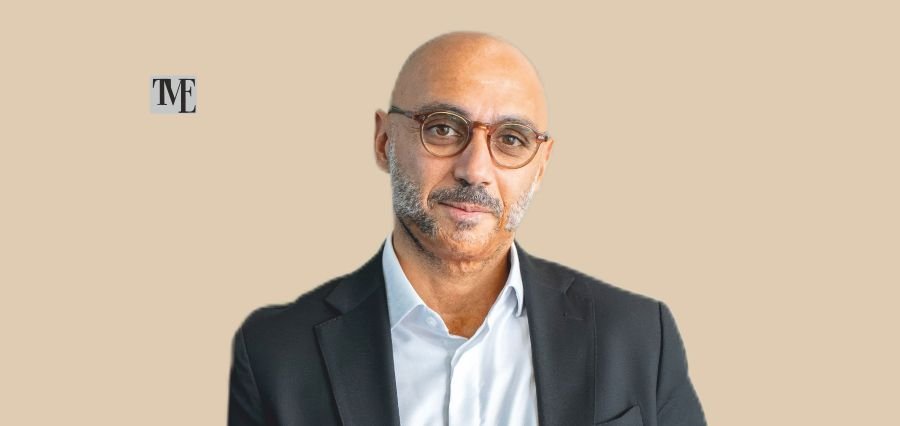
Amer Mneimneh has established himself as one of the Middle East’s most influential figures in urban design and strategic planning. As Regional Managing Director at Prior + Partners – a leading major placemaking consultancy working across the globe – he leads diverse teams across the Middle East and North Africa while maintaining the delicate balance between creative vision and business objectives. His career spans over two decades, during which he has contributed to some of the region’s most significant urban development projects.
Early Foundations and Educational Journey
Amer Mneimneh’s passion for design traces back to his childhood, when, at the age of ten, he spent countless hours drawing street perspectives in his father’s office. These early sketches demonstrated an intuitive understanding of scale, streets, signage, and the relationship between buildings.
His true spark ignited during university, where he encountered instructors from diverse backgrounds and nationalities. These professors introduced him to different perspectives on architecture, built forms, and natural environments. Most importantly, they taught him the methodology of inspiration and idea generation. He learned to draw creative energy from movies, moving objects, species, paintings, and various cultural elements, transforming these influences into architectural statements.
The university experience exposed him to the history of cities and their evolution. He became fascinated by ancient urban forms like Greek agoras and Roman cities. He tried to understand how these central gathering spaces functioned as hubs for community interaction, markets, and social engagement. This historical perspective shaped his understanding that buildings and urban forms should respond to people, demographics, communities, as places of engagement.
During his academic years, Amer Mneimneh embraced the principle that form follows function, and function follows logic rooted in natural phenomena. He learned that every design element should have a reason to exist and an uncontested role. His university projects consistently demonstrated his interest in responding to design briefs from a contextual lens, viewing each site as a puzzle piece that would complete a coordinated picture.
Professional Development and Early Challenges
After graduation and military service, Amer Mneimneh began his career as an architect at a regional multidisciplinary office. He was entrusted with an unexpected responsibility to work on public realm projects in his city, Beirut. This early opportunity led to one of his most formative professional experiences.
He was invited to present one of his urban design proposals to the prime minister. The presentation resulted in complete failure, with the prime minister directly rejecting his proposal for not considering environmental conditions and for lacking coherent logic. This devastating critique became a pivotal learning moment that taught him the importance of understanding a proposal’s impact, implications, and meaning for the wider public and community.
This early failure instilled in him the crucial lesson of accountability and the need to thoroughly consider all aspects of any form of design response. This experience also shaped his approach to leadership and mentorship, emphasizing the value of learning through doing and accepting failures as growth opportunities.
Leadership Philosophy and Team Management
Throughout his career progression, Amer Mneimneh developed a distinctive leadership philosophy centered around allowing people to thrive and grow. He believes in encouraging voices to be heard and ideas to be shared, regardless of team members’ levels, origins, or cultural backgrounds. This approach stems from his conviction that the fusion of diverse ideas creates the most innovative solutions.
In his recent leadership roles, he implemented a competition-based approach for projects, engaging younger staff members and allowing them to contribute their perspectives. While not all ideas reach implementation, this process creates an environment where creativity flourishes and team members feel valued.
His leadership style emphasizes accountability alongside creativity. He understands that allowing people to grow requires them to understand leadership, ownership, and accountability to projects and clients. Amer Mneimneh leads from the front, describing himself as preferring to lead a ship from the deck rather than from shore.
Design Philosophy: Merging Tradition with Modernism
Amer Mneimneh’s design philosophy represents what he acknowledges might be considered an “expired philosophy” in an era increasingly focused on algorithmic design and digital integration. However, he maintains a strong conviction that environmental, demographic, cultural, and contextual solutions remain essential for any successful project. He believes these foundational elements must be merged with modern form interpretations and material innovation.
His approach emphasizes that ancestors were extremely mindful of human needs in city planning and design, evident in their climate-responsive materials, building forms, shapes, courtyards, and agoras. These concepts remain unchanged and will never change, he argues, with modern technology simply being introduced to enhance functionality and performance. His concern lies in contemporary tendencies to prioritize vehicular norms, movement and traffic over human-centered design.
He advocates for returning to design principles that prioritize human experience while incorporating technological advances that improve performance.
Emotional Responsibility in Urban Design
When designing public spaces, Amer Mneimneh emphasizes the importance of considering various emotional responses triggered in users and audiences. He believes public spaces should be memorable, and to achieve memorability, they must trigger the senses creating lasting impressions and emotional connections.
He stresses that public places must accommodate people of different ages, backgrounds, and demographics without discrimination. These spaces should project safety, encourage community engagement, and facilitate interaction among diverse user groups. His examples include Al-Balad in Jeddah, the old souk in Tripoli, Lebanon, and Damascus’s Souk Al-Hamidiya, all of which he describes as sensory places that create memorable experiences.
Regional Contributions and Major Projects
Amer Mneimneh has played significant roles in shaping the Middle East’s evolving urban landscape. His involvement with Dubai Expo 2020 represents a career-defining project that challenged him from day one. Starting with the dream of contributing to this city-changing project in 2013-2014, he eventually led the bid process and served as technical lead and project manager for the master planning stage.
The Expo 2020 project presented multiple challenges including site complexity, leadership expectations, time-driven deadlines, international audience considerations, and the unexpected impact of COVID-19. Working closely with Jason Prior and Graham Goymour – who he is now again working alongside at Prior + Partners – , Amer Mneimneh contributed to delivering event, transformation, and legacy master plans. Attending the actual event filled him with pride at having contributed to this nation-developing project.
His portfolio includes other significant regional projects such as Saadiyat Island in 2008, the Msheireb master plan in Doha, Bluewaters Island, and Dubai Harbour in UAE. In Saudi Arabia, he contributed to various city-wide strategies and plans supporting Saudi Vision 2030. This experience positions him and Prior + Partners to contribute meaningfully to cities and nations seeking to enhance their international positioning in terms of livability, events, destinations, and responsive urban policies.
Balancing Creativity with Business Operations
As Regional Managing Director at Prior + Partners, Amer Mneimneh manages the complex balance between artistic vision and operational execution across the MENA markets. His previous experience at multidisciplinary and multinational consultancies taught him that while design quality remains extremely important, business profitability and sustainability are equally crucial for success.
He developed a co-creation approach with clients that involves rolling out tracing paper and designing collaboratively. This method ensures quicker alignment in design expectations, faster approvals, shorter timeframes, and repeat work relationships. The approach became a philosophy that he and his leadership team apply across projects, ensuring all team members participate in the design process and message delivery to clients.
Sustainability and Technology Integration
Amer Mneimneh views sustainability not merely as an objective to meet or certification to receive but as an unavoidable responsibility. He advocates for mobilizing technologies to inform sustainability-led decisions and using data to create science-based solutions. Amer Mneimneh is reinforcing this approach At Prior + Partners where the team invests time and budget in exploring data-driven solutions through projects and research and development.
He believes there is no avoiding data-driven solutions for more effective design and optimal outcomes. The integration of smart technology and sustainable practices occurs without compromising aesthetic integrity by using these tools to inform better design decisions rather than replacing human creativity and contextual understanding.
Mentorship and Advice for Emerging Talent
Drawing from his extensive experience, Amer Mneimneh offers several key pieces of advice to emerging designers. He emphasizes the importance of experiencing complete project lifecycles from design through execution and supervision. Many young professionals limit themselves to specific project stages, but understanding the full evolution helps designers provide better advice to clients and understand complications at each phase.
He encourages young professionals to identify and work closely with successful individuals in their circles, learning from their expertise and gaining mentorship. Success, he notes, is as contagious as failure. He advocates learning from industry experts, listening carefully, and asking thoughtful questions while developing a personal design ethos through inspiration from others.
Legacy and Future Vision
Amer Mneimneh considers himself a grassroots leader who never initially aspired to leadership roles. But through training, development, observation, and inspiration, he learned to balance people management, client interaction, and organizational growth. Today, he believes he has significant contributions to make toward Prior + Partners’ regional growth.
His leadership philosophy centers on inspiration, visibility, and the courage to make decisions. He believes leaders must claim responsibility and accept accountability when things go wrong, while congratulating team members first when projects succeed. He advocates for partnership-based leadership where everyone from junior to senior levels contributes to organizational success through ownership of stakes in both successes and failures.
Looking ahead, Amer Mneimneh sees his experience contributing to positioning cities and nations on international stages, particularly regarding livability, events, and destination development. His track record with major regional projects provides valuable expertise for future developments, especially as cities like Riyadh prepare for planned international events.
His legacy encompasses not only the physical structures he has helped shape but also the leadership culture and design principles he has championed. Through his emphasis on contextual design, collaborative approaches, and human-centered urban planning, he continues to influence how the Middle East’s cities evolve to meet both local needs and global standards.